
Stanford Graduates Share Views on AI's Impact on Education
Stanford University graduates discuss how artificial intelligence could transform or threaten their educational path. Explore expert perspectives on AI's role in future learning.
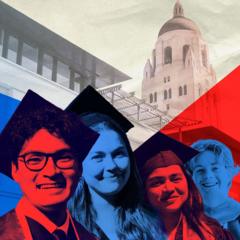
Stanford Graduates Weigh In on Artificial Intelligence's Educational Impact
The BBC recently conducted an extensive investigation into what Stanford graduates genuinely believe about artificial intelligence and its transformative potential. These accomplished alumni, who benefited from one of the world's most prestigious institutions, offer compelling insights into whether AI represents an unprecedented opportunity or a significant threat to the academic foundation that shaped their success.
Understanding the Dual Nature of AI Innovation
When discussing the relationship between Stanford graduates and artificial intelligence, the conversation inevitably becomes nuanced. Many alumni recognize that AI technology continues to evolve at an unprecedented pace, fundamentally reshaping industries and professional landscapes. The Stanford graduates interviewed acknowledged that the university's emphasis on innovation and forward-thinking education equipped them to understand these technological shifts.
However, the perspective among Stanford graduates on artificial intelligence varies considerably. Some view emerging AI capabilities as tools that will amplify human potential, enabling professionals to focus on higher-order thinking and creative problem-solving. Others express concern that artificial intelligence automation might displace traditional career paths that once guaranteed success for Stanford graduates.
The Double-Edged Sword of Technological Advancement
Stanford's distinguished history in computer science and engineering creates a unique vantage point for its graduates regarding artificial intelligence development. These alumni understand both the extraordinary possibilities and the legitimate concerns surrounding AI systems. According to the interviews, Stanford graduates recognize that artificial intelligence could either democratize access to quality education or create new disparities.
Opportunity in an AI-Driven World
Many Stanford graduates express optimism about artificial intelligence's potential to revolutionize problem-solving and innovation. They argue that those trained at institutions like Stanford possess the critical thinking skills necessary to guide responsible AI development. These graduates believe that their education provides advantages in an AI-integrated economy, positioning them to lead organizations navigating technological transformation.
Concerns About Automation and Career Disruption
Conversely, several Stanford graduates voice apprehension about artificial intelligence's capacity to eliminate professional roles. The concern isn't whether AI will change industries—most agree it will—but rather how quickly these transitions might occur and whether existing educational frameworks adequately prepare students for constant reinvention.
Stanford's Educational Preparation for the AI Era
When Stanford graduates reflect on their educational experiences, many credit their institution's curriculum flexibility and emphasis on adaptability. However, they also suggest that even Stanford's rigorous programs may not have anticipated the rapid acceleration of artificial intelligence capabilities. These graduates acknowledge that continuous learning will become increasingly essential, regardless of their initial field of study.
The interviews reveal that Stanford graduates understand artificial intelligence represents more than a technological trend—it's a fundamental shift in how knowledge work is performed. Those who graduated in earlier decades now recognize that their Stanford education's greatest value wasn't specific technical knowledge but rather the ability to learn, adapt, and think critically as new challenges emerge.
Perspectives on Career Trajectories in AI's Shadow
Stanford graduates offer valuable perspective on how professional pathways are already transforming due to artificial intelligence implementation. Many report that their career decisions increasingly consider AI's role in their chosen fields. Some have pivoted toward roles focused on AI governance, ethics, and implementation—areas where human judgment remains irreplaceable.
Others among the Stanford graduates interviewed stress that traditional professional skills—leadership, communication, ethical reasoning—remain valuable even as artificial intelligence handles increasing volumes of analytical work. They emphasize that their Stanford education taught them to think beyond the immediate tool or technology toward deeper strategic questions.
The Role of Elite Education in an AI-Transformed Future
The BBC investigation through conversations with Stanford graduates highlights an essential question: does a Stanford education remain the golden ticket in an era dominated by artificial intelligence? Most respondents suggest the answer is yes, but with significant caveats.
Stanford graduates contend that prestigious institutions maintain value because they teach not just what is known but how to think about what is unknown. In an environment where artificial intelligence rapidly makes existing knowledge obsolete, this capability becomes increasingly precious. They argue that Stanford's emphasis on interdisciplinary thinking and innovation better prepares students to work alongside AI rather than compete against it.
What Stanford Graduates Recommend for Future Students
Based on their collective experience, Stanford graduates offer concrete advice for those facing an AI-transformed educational and professional landscape. They recommend developing complementary skills that artificial intelligence cannot easily replicate: emotional intelligence, creative synthesis across disciplines, ethical reasoning, and human relationship building.
The graduates stress that Stanford's greatest contribution wasn't providing a credential but building a community and mindset. As artificial intelligence becomes increasingly capable at credential-associated tasks, these intangible benefits of elite education may prove more valuable than ever.