
Trump Proposes Fresh Tariffs Against Canada Over Wildfire Smoke Pollution
Trump announces potential tariffs on Canada amid air quality crisis from wildfires. Canadian leader Mark Carney emphasizes shared climate responsibility between nations.
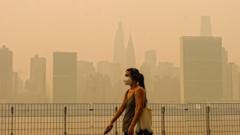
Trump's Tariff Announcement Amid Canadian Wildfire Crisis
The ongoing dispute between the United States and Canada has escalated as Trump tariffs Canada wildfires continue to dominate international headlines. The U.S. president has indicated plans to implement additional tariffs targeting Canadian goods in response to severe air quality degradation caused by extensive wildfire smoke drifting across the border into American metropolitan areas.
Air Quality Impact Across US Cities
Major urban centers throughout the northeastern and midwestern United States have experienced hazardous air quality levels, with visibility reduced and respiratory concerns mounting among residents. The pollution stemming from Canadian forest fires has prompted widespread health advisories and public alerts. Environmental agencies have documented unprecedented particulate matter concentrations in affected regions.
Canada's Response and Climate Perspective
Mark Carney, a prominent Canadian leader and political figure, has responded to these accusations by emphasizing the interconnected nature of environmental challenges. Carney has articulated that both nations share equal responsibility in addressing climate change, which scientific research indicates plays a significant role in intensifying wildfire conditions across North America.
Expert Analysis on Climate and Wildfire Correlation
Climate scientists and environmental experts have consistently documented the relationship between rising global temperatures and increased wildfire frequency and severity. Extended drought periods, higher temperatures, and altered precipitation patterns create ideal conditions for larger and more destructive fires. Research institutions across North America have produced comprehensive studies demonstrating this correlation.
The Broader Trade Policy Context
This situation represents another point of friction in the complex trade relationship between the two neighboring nations. Trump tariffs Canada wildfires underscore how environmental issues increasingly intersect with economic and trade policy discussions. Tariff implementation raises questions about bilateral relations and the effectiveness of punitive trade measures in addressing environmental challenges.
International Cooperation and Climate Action
Carney's position reflects a broader international consensus that climate change mitigation requires coordinated efforts across borders. Both nations possess significant carbon emissions sources and share atmospheric systems that affect air quality on both sides of the border. Experts advocate for comprehensive climate policies rather than tariff-based responses to environmental problems.
Looking Forward: Policy and Environmental Strategy
The situation highlights tensions between short-term trade responses and long-term environmental solutions. While tariffs may generate political attention, environmental advocates argue that sustained investment in forest management, renewable energy transition, and emissions reduction offers more effective pathways forward. Both the United States and Canada face growing pressure from constituents demanding action on air quality and climate stability.