
Venezuela Earthquake Survivors: Families Search for Trapped Loved Ones
Families search for trapped loved ones in Venezuela earthquake zone. Read about the desperate rescue efforts and survival stories emerging from the devastated region.
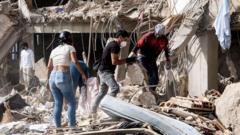
Venezuela Earthquake: Families Unite in Search for Trapped Loved Ones
The Venezuela earthquake survivors and their families face an agonizing wait as rescue teams work tirelessly to locate those trapped beneath collapsed structures. In communities devastated by recent seismic activity, Venezuela earthquake survivors represent both tragedy and hope, as families maintain constant vigils outside damaged buildings where they believe their relatives remain trapped.
The Desperate Search Unfolds
Families continue their vigil at multiple sites across the affected region, standing watch over buildings where they fear their loved ones are trapped. The task of locating Venezuela earthquake survivors has proven extraordinarily challenging, as heavy debris blocks access to potential survivors. Without adequate heavy machinery and specialized equipment, rescue operations proceed at a frustratingly slow pace, leaving families in a state of anxious uncertainty.
The emotional toll on families cannot be overstated. Children call out names of missing parents. Spouses embrace in shared despair. Parents hold photographs of their children, hoping against hope for miraculous discoveries. Each passing hour intensifies the urgency of the search, yet also diminishes statistical chances of finding additional Venezuela earthquake survivors alive beneath the rubble.
Challenges Facing Rescue Operations
The infrastructure in the devastated region was not prepared for such catastrophic damage. Roads leading to affected areas have been damaged by the quakes, complicating access for emergency vehicles and rescue equipment. Heavy debris removal requires specialized machinery that remains in short supply throughout the region. Local authorities face an impossible task balancing the need for rapid response with the practical limitations of available resources.
Equipment and Resource Shortages
Rescue teams working to find Venezuela earthquake survivors operate with insufficient equipment. Heavy construction machinery needed to safely move debris is scarce, forcing workers to rely heavily on manual labor. This approach, while demonstrating tremendous human determination, significantly slows the pace of recovery operations. International aid organizations have begun coordinating shipments of specialized equipment, but logistical delays mean critical days are passing.
Communication Barriers
Many families attempting to locate trapped relatives face challenges reaching emergency services. Damaged telecommunications infrastructure has disrupted normal communication channels. Some families do not know where to direct their inquiries, while others struggle with bureaucratic processes designed for less catastrophic circumstances. Information gaps have created additional anxiety, as families simultaneously search for their loved ones and attempt to understand the scope of regional damage.
Stories of Hope Amid Devastation
Despite overwhelming challenges, individual stories of Venezuela earthquake survivors emerging from the rubble provide moments of genuine hope. Rescue workers report discovering individuals alive in unexpected locations, trapped in air pockets created by the structural collapse. Each successful rescue is celebrated by the broader community, offering encouragement that more Venezuela earthquake survivors may yet be found.
The resilience demonstrated by families maintaining vigils is remarkable. Many have organized community-based search efforts, combining local knowledge with collective determination. Neighbors who barely knew each other before the disaster now work shoulder to shoulder, united by common purpose and shared loss. This spontaneous community response has enabled some families to locate trapped loved ones before official rescue teams arrived.
Regional Impact and Broader Implications
The devastation extends beyond individual tragedies to affect entire communities. Schools, hospitals, and government buildings sustained damage, disrupting essential services when they are most needed. Healthcare facilities struggle to treat earthquake-related injuries while simultaneously managing routine medical needs. The psychological impact on survivors will persist long after physical reconstruction concludes.
Regional infrastructure assessments are underway to determine the full extent of damage. Engineers are evaluating structural integrity of buildings throughout affected zones, a process that may take weeks or months. During this assessment period, uncertainties persist about how many additional individuals may remain trapped, and whether hope remains for locating additional Venezuela earthquake survivors.
International Response and Support
International humanitarian organizations have mobilized to provide assistance. Medical teams from neighboring countries are arriving to support overwhelmed local healthcare systems. Financial aid from international sources is being directed toward rescue operations and humanitarian relief. However, coordination challenges and logistical complexities mean that assistance, while substantial, often arrives slower than urgent needs demand.
The Path Forward
As search and rescue operations continue, families maintain their vigils with a mixture of determination and dwindling hope. Each day brings both discoveries and heartbreaking realizations that some loved ones will not be found alive. The Venezuela earthquake survivors who emerge from this crisis will carry permanent psychological scars alongside their physical injuries. Communities will require years to rebuild, and the emotional recovery may take even longer. Yet amid the devastation, the human capacity for resilience, compassion, and mutual support offers a foundation upon which recovery can be built.