
Helium-3 Moon Mining: The Future Fuel Resource Explained
Discover what Helium-3 is and why lunar mining could revolutionize energy production. Learn about this rare isotope's potential and challenges.
Understanding Helium-3: A Rare Isotope with Global Significance
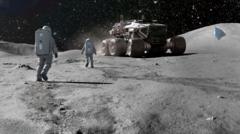
Helium-3 moon mining represents one of the most ambitious energy solutions proposed for the coming decades. This lightweight, non-radioactive isotope exists in minimal quantities on Earth but remains abundantly present in lunar soil, making Helium-3 moon mining an increasingly attractive prospect for scientists and space agencies worldwide.
Helium-3 differs significantly from its more common counterpart, Helium-4. While Helium-4 comprises the vast majority of helium found in Earth's atmosphere, Helium-3 was depleted during our planet's early formation. The moon, however, accumulated substantial deposits of this precious element through billions of years of solar wind bombardment, storing vast quantities in its regolith layer.
Current Helium-3 Availability and Pricing Challenges
Today, Helium-3 remains extraordinarily expensive due to its scarcity. Current extraction methods on Earth yield only minute quantities through nuclear reactor by-products, making the isotope prohibitively costly for most applications. Market analysts project that demand for this resource will surge dramatically as fusion technology advances and new industrial applications emerge.
The financial barriers to accessing terrestrial Helium-3 have prompted serious consideration of extraterrestrial sources. Researchers estimate that lunar soil contains approximately one million tons of Helium-3, sufficient to meet global energy demands for centuries under optimized fusion reactor scenarios.
Why the Moon Holds the Key to Future Energy
The lunar surface presents an ideal natural repository for Helium-3 moon mining operations. Unlike Earth, the moon lacks a protective magnetic field and atmosphere, allowing solar winds carrying this isotope to penetrate directly into its surface materials. Over millennia, this continuous cosmic deposit has created concentrated reserves that far exceed anything available on our planet.
Scientists have identified specific lunar regions with particularly high concentrations of Helium-3, particularly near the lunar poles and ancient volcanic deposits. These locations would provide optimal sites for future extraction operations.
The Technology Behind Lunar Resource Extraction
Extracting Helium-3 from moon soil involves heating regolith samples to release trapped gases, then separating the desired isotope through sophisticated filtration processes. Current technological prototypes demonstrate feasibility, though scaling these operations to industrial levels presents considerable engineering challenges.
The extraction process requires transporting heavy equipment to the lunar surface, establishing processing facilities in harsh extraterrestrial conditions, and safely returning extracted materials to Earth. Mission planners are developing automated systems capable of operating with minimal human intervention to reduce costs and risks.
Revolutionary Applications in Fusion Energy
The primary driver behind interest in Helium-3 moon mining concerns its exceptional potential in fusion reactors. Unlike conventional fusion approaches using deuterium and tritium, Helium-3 fusion produces minimal radioactive byproducts while generating tremendous energy output. A single ton of Helium-3 could theoretically produce energy equivalent to burning three million tons of coal.
As fusion technology transitions from experimental laboratories to commercial viability, demand for clean-burning fuel sources will intensify. Helium-3 offers unparalleled advantages as a fusion fuel, virtually guaranteeing sustained interest in lunar acquisition strategies.
Economic and Logistical Considerations
Implementing large-scale Helium-3 moon mining operations requires substantial initial investment in space infrastructure. Establishing lunar bases, developing reliable transport systems, and creating processing facilities represents a multi-billion-dollar undertaking. However, proponents argue that energy independence and access to unlimited clean power justify these expenditures.
Comparative cost analyses suggest that once mining infrastructure achieves operational status, extraction costs per unit would decline dramatically. Early pioneers in this field could capture enormous market share as global energy demands continue increasing.
International Cooperation and Space Law
The Outer Space Treaty of 1967 established that celestial bodies cannot be claimed as national territory, yet permits resource extraction under specific conditions. This legal framework has spurred international discussions regarding equitable access to lunar resources and benefit-sharing mechanisms among participating nations.
Private space companies and government agencies are negotiating frameworks for responsible Helium-3 moon mining development that respect both commercial interests and global resource distribution concerns.
Timeline for Commercial Operations
Industry experts estimate that pilot mining operations could commence within 15-20 years, contingent upon continued funding and technological advancement. Full-scale commercial extraction capable of supplying global energy markets likely requires 30-40 years of development.
This timeline aligns with projected peaks in fusion energy commercialization, suggesting complementary technological maturation pathways.
Conclusion: The Future of Lunar Resources
Helium-3 moon mining represents humanity's next frontier in sustainable energy acquisition. As terrestrial resources deplete and energy demands intensify, lunar deposits provide a compelling solution to long-term power generation challenges. While significant obstacles remain, the convergence of advancing fusion technology, rising energy prices, and improving space capabilities makes Helium-3 moon mining not merely speculative but increasingly probable within coming decades.