
Bardella Steps Back Into Political Shadows as Le Pen Dominates France's Far-Right
Jordan Bardella, Marine Le Pen's deputy, faces an extended wait for leadership. Explore the shifting dynamics within France's far-right National Rally party.
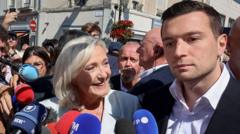
Bardella Faces Uncertain Timeline in Far-Right Leadership Race
Jordan Bardella, Marine Le Pen's ambitious protégé, finds himself sidelined from immediate prominence as France's political landscape shifts unexpectedly. The thirty-year-old had been carefully positioned to assume control of the far-right movement, yet circumstances have forced him into a period of prolonged patience. This development marks a significant turning point in the internal dynamics of France's National Rally party and the broader trajectory of hard-right politics in Europe.
The Rise and Temporary Decline of a Political Star
Bardella's ascension within French political circles appeared meteoric just months ago. His alignment with Marine Le Pen created a seemingly inevitable succession plan that observers across Europe were monitoring closely. However, recent political developments have disrupted this carefully orchestrated timeline. The emerging situation demonstrates how rapidly fortunes can shift in electoral politics, particularly within parties facing intense scrutiny and evolving voter demands.
The deputy's temporary eclipse from the spotlight reflects broader challenges facing France's hard-right movement. Internal party dynamics, legal complications affecting key leadership figures, and shifting electoral priorities have all contributed to Bardella's unexpected retreat into background roles. This repositioning offers insights into how far-right parties manage succession planning and maintain cohesion during periods of transition.
Leadership Vacuum and Party Restructuring
Marine Le Pen's continued dominance of the National Rally creates a unique situation where Bardella must content himself with secondary positions despite his obvious potential. The forty-something political veteran has maintained her grip on party direction through a combination of strategic messaging, personal loyalty networks, and demonstrated electoral appeal. This concentration of power leaves limited room for ambitious subordinates seeking rapid advancement.
The party's internal structure has evolved to accommodate these complexities. Multiple layers of hierarchy now exist where once a more straightforward chain of command prevailed. Bardella's assignment to less visible roles within this restructured arrangement allows the organization to maintain stability while preserving his long-term prospects. This approach mirrors tactics employed by other European far-right parties navigating succession challenges.
External Pressures Reshaping Political Timelines
French legal and electoral institutions have imposed constraints that directly impact National Rally leadership planning. Investigations and judicial proceedings involving senior party figures have created unexpected complications. These external pressures force party strategists to recalculate timelines and revise succession strategies that previously seemed set in stone.
Bardella's retreat into the shadows represents a pragmatic adaptation to these new realities. Rather than positioning himself for immediate prominence, the deputy has adopted a more cautious stance. This strategic withdrawal may ultimately serve his long-term interests by avoiding association with controversial decisions or protecting him from potential legal entanglements affecting other party luminaries.
The Waiting Game: Bardella's Strategic Pause
Political observers note that Bardella's current position, while certainly a setback from his previous trajectory, need not permanently damage his ambitions. Many successful political figures have experienced similar periods of enforced patience before ascending to their ultimate positions. The thirty-year-old possesses several advantages that could facilitate his eventual rise, including youth, name recognition, and established networks within the party apparatus.
His temporary marginalization may provide unexpected benefits. Time away from the highest-profile positions allows Bardella to refine his political message, build additional constituencies, and position himself as a fresh alternative to current leadership when circumstances permit. This extended preparation period, though frustrating in the moment, could strengthen his candidacy for major advancement.
Implications for France's Political Right
The shifting relationship between Bardella and Le Pen carries significance extending beyond internal party dynamics. France's broader right-wing political environment continues evolving, with questions about how far-right movements adapt to changing electoral contexts and institutional challenges. The National Rally's handling of succession planning will influence these larger trends.
Marine Le Pen's ability to maintain control while managing ambitious subordinates like Bardella demonstrates the continued centrality of individual personality within far-right political organizations. Despite ideological messaging emphasizing broader movements, leadership succession in these parties often hinges on personal relationships, loyalty mechanisms, and informal power networks rather than formal constitutional processes.
Looking Forward: Uncertain Horizons
Bardella's future within French politics remains promising despite his current diminished visibility. The underlying factors that elevated him initially—his oratorical skills, generational appeal, and strategic positioning—have not disappeared. His extended wait may prove temporary, a tactical repositioning rather than a permanent decline.
Political succession in complex organizations rarely follows predetermined timelines. Bardella's experience illustrates this fundamental reality. Whether his eventual ascension comes soon or years hence, his current period in the shadows represents a necessary adaptation to evolving circumstances. How he navigates this challenging phase may ultimately determine his effectiveness as a future leader of France's far-right movement.