
Artificial Ice Pyramids: India's Solution for Mountain Water Scarcity
Discover how Himalayan villages use artificial glaciers to secure spring water for crops. Learn about this innovative ice pyramid technology saving mountain communities.
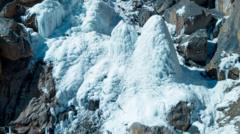
Artificial Glaciers: A Lifeline for Himalayan Communities
Across the remote valleys of the Indian Himalayas, a groundbreaking approach to water management is transforming how mountain villages address seasonal water shortages. Artificial glaciers have emerged as a critical solution, enabling rural communities to store water during winter months and release it systematically when spring crops require irrigation. These innovative structures represent a sustainable response to climate change impacts and shifting precipitation patterns that threaten agricultural livelihoods in high-altitude regions.
Understanding the Ice Pyramid System
The artificial glacier technology operates on a deceptively simple yet highly effective principle. Engineers and local farmers construct pyramid-shaped ice formations in shaded mountain locations where temperatures remain below freezing for extended periods. Water sourced from natural springs or streams is directed through carefully designed channels during winter months, allowing it to freeze progressively in layers. This methodical accumulation creates massive ice reserves that preserve water in its frozen state throughout the cold season.
How the Technology Functions
The artificial glaciers work by harnessing gravity and natural alpine temperatures. Channels funnel water into specially prepared areas, typically on north-facing slopes where shadow protects the ice from premature melting. As winter progresses, successive layers of ice build upon one another, eventually forming pyramid structures that can contain millions of liters of water. Engineers carefully calculate slope angles and water flow rates to maximize ice accumulation while minimizing evaporation losses.
Agricultural Benefits for Mountain Farming
For Himalayan villages dependent on agriculture, the timing of water availability determines crop success or failure. Traditional snowmelt patterns have become increasingly unpredictable due to shifting climate conditions. Artificial glaciers provide farmers with a reliable water supply precisely when spring planting demands peak irrigation. Crops including barley, wheat, peas, and local vegetables flourish when consistent moisture is available during critical growth stages, significantly improving harvest yields and rural household income.
Economic Impact on Local Communities
Enhanced agricultural productivity generated by artificial glacier systems directly strengthens rural economies. Farmers report substantial increases in crop yields when spring water availability matches planting schedules. This reliability enables communities to expand cultivated areas and experiment with higher-value crops previously considered too risky. Improved harvests reduce poverty rates and create opportunities for young people to sustain livelihoods within their home villages rather than migrating to urban centers.
Climate Change and Mountain Water Security
The accelerating effects of climate change have rendered traditional water management practices increasingly inadequate. Natural glacier retreat, altered monsoon patterns, and unpredictable snowfall have created genuine water crises in high-altitude agricultural zones. Artificial glacier technology offers communities a proactive adaptation strategy that operates within existing natural systems rather than requiring massive infrastructure investments. This approach demonstrates how local innovation can address global climate challenges at the village level.
Implementation Across Himalayan Regions
Multiple villages throughout Ladakh, Himachal Pradesh, and Kashmir have successfully implemented artificial glacier systems with remarkable results. Local environmental organizations have partnered with community leaders to identify optimal locations, design appropriate structures, and train farmers in maintenance procedures. The relatively low cost of installation compared to conventional irrigation systems has enabled rapid adoption across resource-constrained mountain communities.
Community Engagement and Knowledge Sharing
Successful artificial glacier projects depend heavily on community participation and collective management. Village water committees establish guidelines for water allocation, determine irrigation schedules, and coordinate maintenance activities. Traditional knowledge holders collaborate with engineers to refine techniques and adapt foreign models to local conditions. This collaborative approach ensures that technologies remain culturally appropriate and responsive to specific community needs.
Challenges and Future Development
Despite impressive successes, artificial glacier systems face ongoing challenges requiring continued attention. Climate warming threatens the reliability of subzero temperatures necessary for ice formation and preservation. Some regions experience insufficient water sources to fill structures during winter months. Maintenance demands remain high, requiring sustained community commitment and technical expertise.
Scaling Innovation for Greater Impact
Researchers and development organizations continue refining artificial glacier technologies to enhance efficiency and expand applicability across different mountain zones. Improved design modifications promise larger ice storage capacity with reduced maintenance requirements. Integration with other water conservation techniques such as rainwater harvesting and groundwater recharge offers comprehensive solutions to mountain water security challenges.
Global Recognition and Replication Potential
The success of artificial glacier systems in Indian Himalayan villages has attracted international attention from climate adaptation specialists and agricultural development professionals. Similar projects are being explored in mountain regions across Central Asia, South America, and other high-altitude zones facing comparable water security issues. The proven effectiveness of this low-technology approach offers hope for climate-vulnerable communities worldwide.
As climate patterns continue shifting and water stress intensifies globally, artificial glaciers represent tangible evidence that innovative thinking combined with community action can address seemingly insurmountable environmental challenges. Mountain villages have pioneered a solution that protects both agricultural productivity and cultural continuity in one of the world's most vulnerable geographic regions.