
Artificial Ice Pyramids: How Himalayan Villages Secure Spring Water
Himalayan communities build artificial glaciers to guarantee water supply for crops. Discover how ice pyramids are solving water scarcity in mountain villages.
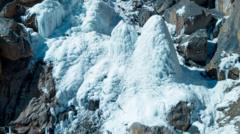
Artificial Glaciers: A Solution for Mountain Water Scarcity
Across the high-altitude regions of the Himalayas, communities are implementing an innovative approach to address critical water shortages by constructing artificial glaciers. These engineered ice structures represent a groundbreaking response to the challenges faced by remote mountain villages that depend heavily on seasonal water availability for agricultural productivity and survival.
The artificial glaciers serve as natural water reserves that melt during spring months, providing essential irrigation for crops when natural water sources become scarce. This solution has transformed the relationship between Himalayan villages and their water management practices, offering hope to communities that have struggled with unpredictable precipitation patterns and climate variability.
How Artificial Ice Pyramids Work
The construction of artificial glaciers involves a sophisticated yet environmentally sensitive process. Local engineers and environmental experts collaborate to redirect water from natural mountain streams during winter months when temperatures are sufficiently cold for freezing.
The water is channeled through carefully designed channels and basins, where it accumulates and freezes in pyramidal or conical formations. These ice structures accumulate gradually throughout the winter season, storing vast quantities of frozen water. When spring arrives and temperatures rise, the artificial glaciers begin their controlled melt cycle, releasing water precisely when agricultural demands peak.
Benefits for Mountain Communities
The implementation of artificial glacier projects has yielded remarkable benefits for Himalayan settlements. Farmers can now plan irrigation schedules with greater certainty, knowing that water will be available during critical growing periods for essential crops including apples, apricots, and vegetables.
Beyond agricultural advantages, these ice pyramids enhance food security and economic stability for rural communities. The consistent water supply reduces dependence on uncertain monsoon patterns and allows farmers to expand cultivation areas previously abandoned due to water uncertainty. Additionally, the projects create employment opportunities for local residents involved in construction, maintenance, and monitoring of the artificial glacier systems.
Environmental and Climate Considerations
The artificial glacier initiative represents an adaptation strategy to climate change impacts affecting the Himalayas. Rising temperatures have accelerated the melting of natural glaciers, reducing the traditional water supplies that mountain communities historically depended upon. By creating supplementary ice reserves, villages develop resilience against ongoing environmental changes.
Environmental scientists emphasize that artificial glaciers are designed as complementary systems rather than replacements for natural water sources. The projects incorporate sustainable practices that minimize ecological disruption while maximizing water conservation. Water redirected for glacier formation is carefully managed to avoid depleting stream ecosystems.
Success Stories from Himalayan Regions
Several Himalayan villages have become models for successful artificial glacier implementation. Communities in Ladakh, Kashmir, and Himachal Pradesh have documented significant improvements in agricultural output since installing these systems. Local testimonials reveal increased crop yields, improved livelihoods, and strengthened community resilience.
Engineering teams have continuously refined the technology, adapting designs to suit different altitudes, temperatures, and geographical conditions across various mountain regions. This iterative approach ensures that artificial glacier projects remain effective and sustainable across diverse Himalayan environments.
Challenges and Future Prospects
Despite impressive results, artificial glacier projects face ongoing challenges including initial construction costs, maintenance requirements, and technical expertise needs. Many remote villages require external support from government agencies and non-governmental organizations to establish and maintain these systems.
Looking forward, experts anticipate expanded adoption of artificial glacier technology throughout the Himalayan region. Improved engineering designs, reduced implementation costs, and growing recognition of climate adaptation benefits position artificial glaciers as a critical infrastructure component for mountain communities facing water security challenges.
Conclusion
Himalayan villages are demonstrating innovative problem-solving through artificial glacier construction, creating sustainable water solutions for agricultural communities. These ice pyramids symbolize human ingenuity in adapting to environmental challenges while protecting traditional livelihoods. As climate patterns continue shifting, artificial glaciers represent a practical and effective tool helping mountain communities secure their water futures and maintain agricultural prosperity.