
Venezuela Earthquake Death Toll Rises as Families Struggle to Identify Victims
Families in Venezuela face anguished identification process at makeshift morgue following devastating earthquake that has overwhelmed local emergency services and healthcare infrastructure.
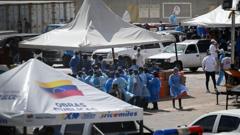
Venezuela Earthquake Creates Identification Crisis for Grieving Families
A devastating earthquake in Venezuela has left families in a state of profound distress as they attempt to identify their loved ones at improvised morgue facilities. The scale of the Venezuela earthquake victims identification process has become increasingly complex, with local authorities struggling to manage the overwhelming number of deceased individuals requiring recognition and proper handling.
Overwhelmed Emergency Services Struggle with Disaster Response
The disaster has fundamentally strained the capacity of local services throughout the affected regions. The sheer volume of casualties has forced emergency personnel to establish unconventional facilities for body storage and identification. Rather than using traditional morgue infrastructure, authorities have resorted to placing bodies outside or within temporary tent structures due to the complete saturation of standard facilities.
Makeshift Solutions to an Unprecedented Crisis
The situation reflects the magnitude of destruction and the insufficient resources available to handle such a catastrophic event. Hospital morgues and medical examination centers have reached absolute capacity, prompting officials to convert outdoor spaces and temporary structures into identification areas. This approach, while necessary given the circumstances, has added to the emotional trauma experienced by families searching for their relatives among the rows of bodies awaiting identification.
The Identification Process Amid Chaos
Families arriving to search for missing loved ones face an agonizing task in these makeshift locations. The lack of proper infrastructure means that the identification process is slow, emotionally taxing, and complicated by inadequate record-keeping systems. Many relatives have reported waiting extended periods in difficult conditions while attempting to locate and confirm the identities of their family members.
Challenges in Record Management and Documentation
Local authorities have acknowledged the difficulty in maintaining accurate records during such unprecedented circumstances. The Venezuela earthquake victims identification effort has been hampered by damaged communication systems, destroyed infrastructure, and the simple lack of adequate personnel trained in disaster victim identification protocols. These systemic challenges have created additional delays and complications for grieving families seeking closure.
Community Impact and Long-term Concerns
The humanitarian implications of this disaster extend far beyond immediate casualty numbers. Communities throughout the affected areas are grappling with the loss of essential services, destroyed homes, and the psychological toll of widespread trauma. The Venezuelan government and international relief organizations are working to coordinate response efforts, though resource limitations continue to impede progress.
International Assistance and Relief Efforts
Various humanitarian organizations have begun deploying personnel and resources to assist with disaster recovery operations. The scope of assistance needed for proper identification, documentation, and eventual dignified handling of deceased individuals far exceeds what local services can manage independently. International expertise in disaster victim identification has become crucial to improving the efficiency and accuracy of ongoing identification processes.
Supporting Families Through Tragedy
Mental health professionals and social workers are recognizing the severe psychological impact on families enduring the Venezuela earthquake victims identification ordeal. Support services remain critically underfunded and understaffed during this period of heightened need. Communities are attempting to organize informal support networks to help families navigate the identification process and begin the grieving process with some measure of dignity and assistance.
The ongoing efforts to manage this humanitarian crisis underscore the importance of disaster preparedness infrastructure, adequate emergency response training, and international cooperation protocols for managing mass casualty events. As identification work continues, the focus remains on providing bereaved families with the information they need while treating all deceased individuals with appropriate respect and care.