
Ukraine Strikes Hit Russia's Major E-Commerce Distributor Ozon
Ukrainian forces target Ozon warehouses across southern Russia including Dagestan and Krasnodar in overnight military strikes against major retailer.
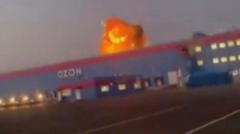
Ozon Ukraine Strikes Target Key Infrastructure
Ukraine's military operations have escalated with coordinated Ozon Ukraine strikes against the country's second-largest online retailer, marking a significant development in the ongoing conflict. The overnight bombardment focused on critical logistics infrastructure operated by Ozon, one of Russia's most prominent e-commerce platforms, dealing a substantial blow to the nation's retail supply chain.
Warehouse Locations Affected by the Attack
According to statements released by company officials, multiple Ozon warehouse facilities sustained direct hits during the coordinated assault. The southern Russian regions bore the brunt of the offensive, with confirmed impacts across several strategically important distribution centers. Dagestan, a key logistics hub in the North Caucasus region, experienced significant damage to storage and sorting facilities operated by the retailer.
The Krasnodar region, situated in southern Russia near the Black Sea, also reported substantial warehouse damage from the overnight strikes. These facilities serve as crucial distribution nodes for Ozon's nationwide delivery network, processing thousands of orders daily destined for customers across the Russian Federation. The company's operational capacity in these regions faces considerable disruption as damage assessments continue.
Impact on Russia's E-Commerce Sector
Ozon's role as Russia's second-largest online retailer makes this Ozon Ukraine strikes campaign particularly consequential for the broader economy. The company operates one of the most extensive logistics networks in the nation, managing inventory across numerous regional warehouses. The destruction of these facilities creates immediate logistical challenges and threatens the company's ability to maintain service levels across its customer base.
Prior to this military action, Ozon had established itself as a dominant force in Russian digital commerce, competing fiercely with Yandex Market and other platform competitors. The company's warehouse infrastructure represents years of investment in supply chain modernization and capacity expansion. The loss of functionality in key southern hubs forces the company to redirect operations to remaining facilities, potentially causing significant delays in order fulfillment.
Strategic Significance of the Operations
The targeting of commercial infrastructure during wartime reflects evolving military strategy and the integration of economic pressure into broader conflict objectives. By focusing on major retailers and logistics operators, military planners aim to disrupt civilian supply chains and apply additional economic strain on the opposing nation's economy. Ozon facilities, being civilian in nature but economically critical, represent infrastructure that sustains consumer commerce and everyday commerce for Russian citizens.
Supply chain vulnerability in wartime has proven increasingly important as modern conflicts extend beyond traditional military targets. The destruction of warehouse capacity reduces the resilience of the Russian economy to absorb shortages and delivery delays. For Ozon specifically, the company must navigate both immediate operational crises and longer-term strategic planning amid continuing military operations.
Broader Implications for Russian Logistics
The aftermath of these Ozon Ukraine strikes extends beyond a single company's operational challenges. Russia's entire e-commerce and logistics sector faces increased pressure as distribution infrastructure becomes militarized in the strategic calculus of the conflict. Other major retailers and logistics companies must now contend with heightened security concerns and accelerated contingency planning.
Companies have begun diversifying their warehouse locations and implementing redundancy in their supply chains to mitigate similar risks. The economic consequences ripple through the broader commercial ecosystem, affecting suppliers, contractors, and ultimately consumer access to goods. Price increases and product availability issues may follow as retailers attempt to compensate for reduced distribution capacity.
Company Response and Recovery Efforts
Ozon has not yet released comprehensive statements regarding casualty counts or precise damage assessments at the affected facilities. Recovery operations commenced immediately following the strikes, with personnel mobilized to salvage undamaged inventory and restore partial operational capability. The company faces critical decisions regarding temporary relocation of operations and prioritization of which orders can be fulfilled given reduced capacity.
The financial impact of these strikes remains uncertain pending formal damage evaluations. Reconstruction timelines for warehouse facilities typically require months of intensive work and substantial capital investment. Ozon's management must balance immediate operational recovery with longer-term strategic planning in an environment of continued military uncertainty.
Context of Ongoing Conflict
The Ozon Ukraine strikes represent one component of broader military operations targeting Russian infrastructure. Ukrainian forces have previously conducted strikes against military installations, energy facilities, and transportation networks. The expansion of targeting to include major commercial enterprises indicates an intensifying approach to economic disruption as a military strategy.
Both nations continue developing and implementing new tactical approaches to achieve strategic objectives. For Ukraine, strikes against civilian infrastructure serve multiple purposes: degrading the enemy's economic capacity, limiting supply availability, and maintaining constant pressure on the Russian population. These operations demonstrate the interconnected nature of modern warfare, where economic and commercial targets become valid strategic considerations.