
Ukraine Faces Critical Interceptor Missile Shortage Amid Heavy Attacks
Ukraine warns of interceptor missile shortage as Russia intensifies attacks with 68 missiles and 351 drones. At least 23 killed in Kyiv region during massive assault.
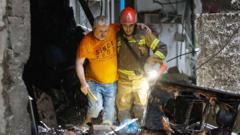
Ukraine Confronts Mounting Interceptor Missile Shortage
The interceptor missile shortage Ukraine faces has reached critical levels as the nation grapples with an unprecedented surge in Russian air operations targeting civilian and military infrastructure. Ukrainian officials have issued urgent warnings about the depletion of air defense capabilities amid relentless bombardment across multiple regions.
During a devastating assault that occurred over the weekend, approximately 68 cruise missiles and 351 unmanned strike drones descended upon Ukrainian territory, with particular intensity focused on the Kyiv metropolitan area. The scale of this coordinated offensive has exposed significant vulnerabilities in Ukraine's ability to neutralize incoming threats effectively.
Scale of Russian Air Offensive Unprecedented
President Zelensky characterized the weekend operation as a "massive Russian attack" that demonstrated Moscow's commitment to achieving air superiority through attrition and overwhelming volume. The deployment of over 400 separate weapons systems within a single coordinated assault represents one of the most concentrated aerial campaigns witnessed since the full-scale invasion began.
The combination of cruise missiles and strike drones created a complex defense scenario for Ukrainian air defense operators. While some weapons were successfully intercepted, the sheer quantity meant that numerous projectiles penetrated defensive positions and reached their intended targets within populated urban centers.
Casualties Mount in Kyiv Region
Preliminary reports indicate that at least 23 individuals perished during the assault on the Kyiv region, with additional casualties reported in surrounding areas. Emergency response teams continued search and rescue operations throughout affected neighborhoods, identifying victims from residential buildings that sustained direct impacts.
Infrastructure damage extended beyond military installations to include civilian facilities, power generation plants, and essential services infrastructure. The targeting pattern suggests deliberate Russian strategy to degrade Ukraine's capacity to sustain military operations while simultaneously inflicting economic and humanitarian costs on the civilian population.
The Interceptor Missile Shortage Crisis
The interceptor missile shortage that Ukrainian defense officials now highlight stems from sustained high operational tempo requirements. Air defense batteries require continuous resupply of anti-aircraft missiles to maintain defensive coverage across the nation's vast territory.
Current depletion rates, driven by the frequency and volume of Russian attacks, have outpaced Ukraine's capacity to replenish stocks through existing supply channels. Western allies have committed to providing additional air defense systems and ammunition, yet delivery timelines cannot always match the accelerating pace of Russian operations.
Air Defense Systems Under Extreme Strain
Ukrainian air defense forces operate complex systems including Patriot missile batteries, S-300 variants, and portable air defense systems distributed across multiple regions. Each system possesses limited magazine capacity, meaning operators face strategic choices regarding which threats to engage and which to allow passage.
The mathematics of air defense favor the attacker, particularly when defending against waves of diverse weapons systems. A single air defense battery cannot simultaneously track and engage multiple targets arriving from different vectors, creating inevitable gaps in coverage that sophisticated adversaries exploit systematically.
International Support and Future Prospects
Western nations have recognized the critical importance of sustaining Ukrainian air defense capabilities. NATO allies have committed to expedited deliveries of Patriot missiles, IRIS-T systems, and other advanced air defense platforms designed to complement existing Ukrainian capabilities.
However, the rate of weapons consumption now significantly exceeds production capacity across allied nations. This structural imbalance means Ukraine faces a protracted period of operational constraint unless international industrial production accelerates substantially. Military analysts assess that this situation will persist as a defining challenge throughout the ongoing conflict.
Strategic Implications
The interceptor missile shortage Ukraine currently experiences represents more than a temporary logistical challenge. It reflects the fundamental asymmetry in this conflict where one belligerent possesses vastly greater industrial capacity and weapons production, while the other depends entirely upon external support for military sustainability.
Ukraine's survival depends not merely on battlefield resolve but on maintaining minimum viable air defense capabilities. Continued international commitment to replenishing air defense ammunition remains essential to preventing Russian aerial campaigns from achieving their strategic objectives of infrastructure destruction and civilian demoralization.