
Supreme Court Delivers Mixed Rulings for Trump: Major Wins and Notable Defeats
Discover how the US Supreme Court's recent decisions have both strengthened Trump's authority and rejected key initiatives, reshaping presidential power dynamics.
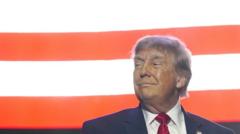
Supreme Court Trump Rulings Mark Pivotal Term
The conclusion of this Supreme Court term presents a complex picture regarding Supreme Court Trump rulings, showcasing both significant triumphs and substantial setbacks for the former president. While certain landmark decisions have expanded executive authority in unprecedented ways, the highest court in the nation has simultaneously rejected several prominent initiatives championed by Trump and his administration, creating a nuanced legacy that extends far beyond simple partisan calculations.
Birthright Citizenship and Immigration Policy
Among the most consequential rulings of this judicial term, the Supreme Court's decision concerning birthright citizenship has drawn widespread attention and debate. This particular judgment effectively closes a contentious chapter in immigration law, addressing whether the Fourteenth Amendment guarantees citizenship to children born in American territory regardless of parental immigration status. The birthright citizenship ruling represents one of the most anticipated resolutions in recent constitutional jurisprudence, with implications that will reverberate through demographic policy discussions for years to come.
The court's approach to this sensitive matter demonstrates how justices balanced competing constitutional interpretations against prevailing political sentiment. Immigration advocates and legal scholars have scrutinized every aspect of the decision, recognizing that its ramifications extend beyond immediate policy implementation to fundamental questions about American identity and belonging.
Presidential Authority Expansion
Concurrently, the Supreme Court has issued rulings that meaningfully expanded presidential power in ways that strengthen executive branch autonomy. These decisions have granted the chief executive broader latitude in implementing administrative policies without congressional interference, reinforcing what constitutional scholars describe as an executive supremacy doctrine. The expansion of presidential authority reflects the court's current ideological composition, which tends to favor a more muscular interpretation of executive prerogative.
These victories represent crucial wins for Trump's legal and policy agenda, particularly regarding immigration enforcement, regulatory oversight, and national security matters. The ability to exercise expansive executive power without extensive judicial second-guessing provides substantial flexibility for presidential decision-making in contested policy domains.
Mixed Outcomes and Judicial Restraint
However, the term has not been uniformly favorable to Trump's interests. The Supreme Court has rejected multiple initiatives that would have further consolidated executive authority or transformed existing legal frameworks according to Trump-backed proposals. These defeats highlight the court's occasional willingness to impose constitutional limits on executive overreach, even within a conservative-majority composition.
Legal analysts note that certain justices have demonstrated independence from partisan pressures, prioritizing institutional legitimacy and constitutional constraint over ideological alignment with any particular political figure. This pattern suggests that Supreme Court Trump rulings cannot be reduced to simple partisan politics, despite perceptions to the contrary among casual observers.
Constitutional Implications and Future Precedent
The cumulative effect of this Supreme Court term establishes important precedents that will influence American constitutional law for decades. The interplay between expanded presidential power and rejected executive initiatives creates a complex constitutional landscape where future administrations must navigate carefully between asserting legitimate authority and respecting judicially-enforced boundaries.
Constitutional scholars continue analyzing these decisions' long-term implications for separation of powers doctrine, administrative law, and the judiciary's role in checking executive excess. The decisions collectively suggest that while courts may grant presidents substantial deference in certain domains, judicial review remains a meaningful constraint on unchecked executive power.
Broader Impact on American Governance
Beyond immediate political consequences, these rulings affect how American government functions across multiple levels. Federal agencies must reconcile expanded executive authority with judicial decisions limiting certain administrative approaches. State governments similarly navigate new parameters established by birthright citizenship and immigration-related determinations, requiring policy adjustments throughout the country.
The term's mixed outcomes underscore that Supreme Court Trump rulings operate within complex constitutional frameworks that resist simple characterization as wholesale victories or defeats. Rather, this judicial term exemplifies the ongoing tension between executive prerogative and constitutional limitation that has defined American governance since the republic's founding.