
Standards Watchdog Reopens Farage Investigation Amid Byelection Backlash
Standards watchdog reopens investigation into Nigel Farage's finances as political rivals condemn the Clacton byelection. Farage claims victory despite mounting scrutiny.
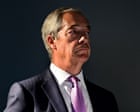
Standards Watchdog Reopens Farage Investigation
The standards watchdog has officially resumed its Farage investigation into the Reform UK leader's financial dealings, marking a significant development in the ongoing scrutiny of his affairs. This decision comes as Nigel Farage faces mounting criticism from across the political spectrum regarding his conduct and the controversial Clacton byelection.
The reopening of the Farage investigation represents a substantial setback for the Reform UK leader, who had apparently hoped that maintaining distance from the vote count would shield him from public controversy. However, this strategy appears to have produced the opposite effect, intensifying rather than diminishing the focus on his financial arrangements.
Victory Claims Overshadowed by Political Fallout
Despite securing what he characterized as a decisive victory in the Clacton byelection, Farage's triumph has been substantially undermined by the renewed standards watchdog scrutiny. The Reform UK leader was returned to Parliament with an increased majority, surpassing his 2024 vote share and bolstering his position within the party.
In his victory statement, Farage declared that he had "stuck two fingers up at the entire political establishment," positioning his success as a defiant gesture against traditional political structures. However, this bravado has been tempered by the immediate resumption of the Farage investigation, which casts a shadow over his parliamentary comeback.
Farage's Strategy of Avoidance Backfires
The Reform UK leader made a calculated decision to remain absent from the vote count in Clacton, reportedly to avoid being "humiliated by nobodies" present at the tallying process. This withdrawal appeared to be part of a broader strategy to distance himself from potential embarrassment and deflect attention from the standards watchdog's earlier concerns about his financial affairs.
However, this tactic ultimately proved counterproductive. Rather than shielding himself from scrutiny, Farage's absence from the crucial moment merely highlighted the underlying tensions surrounding his position and invited renewed examination of his conduct. Political observers suggest that his attempt to manage perceptions has instead amplified the negative narrative.
Cross-Party Condemnation of the Byelection
The byelection itself has attracted criticism from MPs representing multiple political parties, who view it as unnecessary and potentially damaging to public trust in Parliament. Many commentators question the decision to call the election and argue that the circumstances surrounding it reflect poorly on the political process.
Members of Parliament from the Labour Party, Conservative Party, and Liberal Democrats have all expressed reservations about the byelection, citing concerns about the use of parliamentary resources and the timing of the vote. This unified criticism from across party lines underscores the broader dissatisfaction with how the situation has unfolded.
Financial Affairs Under Scrutiny
The renewed focus on the Farage investigation into his financial affairs raises important questions about transparency and accountability in political life. The standards watchdog's decision to reopen the probe suggests that officials believe there remain unresolved questions about how he has managed his finances and any potential undisclosed arrangements.
These inquiries form part of a larger conversation about standards in Parliament and the obligations placed on elected representatives to maintain the highest levels of integrity. The Farage investigation exemplifies ongoing tensions between political figures and institutional oversight mechanisms designed to protect public confidence.
Broader Implications for Reform UK
Beyond the immediate political drama, the Farage investigation and its attendant controversies raise questions about the future direction of the Reform UK party. The movement has positioned itself as an anti-establishment force, yet its leader now faces precisely the kind of institutional scrutiny that characterizes traditional politics.
The tension between Reform UK's populist messaging and the formal mechanisms of parliamentary accountability creates a complex dynamic that will likely shape the party's trajectory. Whether Farage can maintain his influence while navigating the Farage investigation remains an open question.
Looking Ahead
As the standards watchdog proceeds with its Farage investigation, political observers will be watching closely to see how the situation develops. The outcome could have significant implications not only for Farage personally but also for the broader landscape of British politics and public confidence in parliamentary institutions.