
Portable Air Conditioners: The Viral Internet Deception Exposed
Discover how fake portable air conditioners are misleading consumers online. The ASA reveals the truth about viral 'cool in 90 seconds' claims and rapid cooling devices.
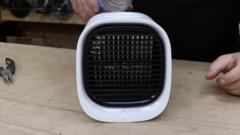
Portable Air Conditioners Flood Internet with False Promises
The widespread promotion of portable air conditioners claiming extraordinary cooling capabilities has become a significant concern for regulatory authorities. These devices, heavily advertised across social media platforms and online marketplaces, promise to cool entire rooms in remarkably short timeframes. The Advertising Standards Authority (ASA) has recently challenged these portable air conditioners marketing campaigns, determining that manufacturers and retailers are making claims that simply cannot be substantiated.
What began as isolated product listings has evolved into a comprehensive internet phenomenon, with countless variations of these cooling devices appearing daily on various e-commerce platforms and social networking sites. Consumers worldwide have been drawn to the appeal of affordable climate control solutions, only to discover that portable air conditioners deliver results far below advertised expectations.
The ASA's Investigation into Misleading Claims
The Advertising Standards Authority conducted a thorough examination of marketing materials related to these portable air conditioners. Their investigation revealed that advertisements promoting rapid cooling—particularly claims suggesting rooms could reach comfortable temperatures within 90 seconds—were fundamentally misleading. The ASA determined these statements exceeded what the devices could realistically achieve.
Manufacturers of portable air conditioners have relied heavily on eye-catching promotional language designed to capitalize on consumer frustration with traditional cooling solutions. These devices, which typically operate through evaporative cooling or minimal refrigeration systems, cannot possibly deliver the instantaneous temperature reduction promised in viral marketing campaigns. The ASA's findings suggest that the scientific principles behind these portable air conditioners simply do not support such extraordinary claims.
How False Advertising Exploits Consumer Needs
During summer months, demand for cooling solutions increases dramatically, making consumers particularly vulnerable to exaggerated marketing claims. The appeal of compact, affordable portable air conditioners is understandable, but manufacturers have systematically exploited this demand by presenting unrealistic performance metrics. The ASA's intervention highlights the importance of honest product representation in the digital marketplace.
Understanding What Portable Air Conditioners Actually Do
Legitimate portable air conditioners serve a purpose, but their capabilities remain limited compared to central air systems or window units. These devices function through various cooling mechanisms, ranging from simple evaporative technology to more sophisticated refrigeration approaches. However, even the most advanced portable air conditioners operate within physical and thermodynamic constraints that prevent them from achieving the results advertised online.
Real-world performance of portable air conditioners depends on numerous factors including room size, insulation quality, ambient temperature, and humidity levels. A device cannot cool a standard bedroom in 90 seconds—this fundamental impossibility should have been evident to regulatory bodies from the outset. The ASA's determination validates consumer skepticism regarding these overstated claims.
Factors Affecting Cooling Performance
When evaluating portable air conditioners, potential buyers should consider room dimensions, ventilation requirements, and power consumption. The devices marketed across the internet often ignore these critical variables, instead focusing entirely on spectacular but fabricated performance claims. Honest product descriptions would acknowledge these limitations rather than suggest instant climate control.
The Broader Impact on E-Commerce Trust
The proliferation of misleading portable air conditioners advertising represents a larger problem affecting online shopping environments. When regulatory bodies like the ASA must intervene repeatedly, it signals a systemic failure in self-regulation within digital marketplaces. Consumers increasingly question whether online product claims merit any credibility at all.
This situation extends beyond simple buyer's remorse. Customers purchasing portable air conditioners based on false claims may delay seeking alternative cooling solutions, potentially suffering through uncomfortable conditions while unreliable devices fail to deliver. The financial and comfort impacts on affected consumers justify strong regulatory action against misleading marketing practices.
Regulatory Response and Consumer Protection
The ASA's intervention represents an important step toward protecting consumers from deceptive portable air conditioners advertising. However, enforcement challenges persist when manufacturers operate across international boundaries or employ complex supply chain arrangements. Continued vigilance and stronger penalties may be necessary to discourage future violations.
Consumers encountering advertisements for portable air conditioners should approach dramatic performance claims with considerable skepticism. The ASA's findings provide authoritative evidence that viral marketing claims regarding these devices cannot be trusted. Future purchasing decisions should prioritize realistic product specifications over sensational promotional language.
Moving Forward: What Consumers Should Know
The exposure of misleading portable air conditioners marketing serves as a cautionary tale for online shoppers. Before investing in any climate control solution, consumers should research independent reviews, compare technical specifications, and ignore exaggerated claims. The ASA's determination demonstrates that regulatory oversight, while imperfect, remains essential in maintaining marketplace integrity.
Portable air conditioners can provide supplemental cooling in specific situations, but they should never be considered miracle solutions to climate control challenges. By understanding both the capabilities and limitations of these devices, consumers can make informed purchasing decisions and avoid falling victim to the same deceptive practices that motivated ASA intervention.