
Police Called Off Chase 10 Seconds Before Fatal Crash
Watchdog reveals officers halted pursuit just seconds before fatal crash on dual carriageway. Critical decision raised questions about timing and safety protocols.
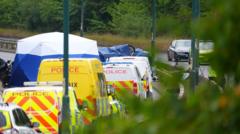
Police Pursuit Ended Moments Before Tragic Collision
A police pursuit fatal crash investigation has revealed critical timing details surrounding a tragic incident on a busy dual carriageway. According to findings from the independent watchdog, law enforcement officers discontinued their high-speed chase approximately ten seconds before the vehicle collided, raising important questions about decision-making during emergency operations and the effectiveness of pursuit termination protocols.
The incident unfolded when officers began pursuing a vehicle that subsequently traveled in the wrong direction down the dual carriageway. This dangerous maneuver created an extremely hazardous situation for all road users in the vicinity, transforming an already-critical pursuit into a catastrophic scenario.
Timeline of Events Leading to Tragedy
Understanding the sequence of events is essential to comprehending how this police pursuit fatal crash occurred. Officers initiated their pursuit following standard protocols, maintaining contact with the suspect vehicle as it navigated through traffic. However, the situation escalated dramatically when the driver made the decision to drive against the flow of traffic on the dual carriageway.
The pursuit lasted several minutes before commanding officers made the decision to terminate the chase. This decision came just ten seconds before the inevitable collision occurred. The timing raises fundamental questions about whether earlier termination might have altered the outcome, or whether the crash would have happened regardless of the pursuit's continuation.
Watchdog Findings and Safety Analysis
The independent watchdog's investigation into the police pursuit fatal crash has examined every aspect of the officers' decision-making process. Investigators analyzed communications between field officers and supervisory personnel, reviewed vehicle data, and examined the circumstances that led to the pursuit's termination at such a critical moment.
The watchdog emphasized that officers face extraordinarily difficult decisions during high-speed pursuits. The moment to discontinue a chase requires balancing the danger posed by the pursuit itself against the risk of allowing a suspect to escape. In this case, the decision came too late to prevent tragedy, though investigators continue analyzing whether earlier termination would have been feasible given the circumstances at that moment.
Dual Carriageway Dangers in High-Speed Pursuits
The decision to drive the wrong way down a dual carriageway represents an extreme escalation in danger. Dual carriageways typically accommodate high-speed traffic flowing in opposite directions, separated by barriers or median strips. When a vehicle enters against this flow, it creates a head-on collision scenario with multiple vehicles traveling at high speeds.
This particular aspect of the incident demonstrates how quickly pursuit situations can evolve beyond officers' ability to control outcomes. While pursuing officers maintained contact with the vehicle before it entered the dual carriageway, the split-second decision by the suspect driver to reverse direction created circumstances that no pursuit termination could have prevented once initiated.
Police Pursuit Protocols Under Scrutiny
Following this tragedy, law enforcement agencies are reviewing their pursuit termination protocols. The police pursuit fatal crash has sparked broader conversations within policing communities about when chases should continue and when they should be abandoned in favor of alternative tactics.
Modern policing increasingly emphasizes precision and officer safety alongside public protection. Advanced technologies, including aerial surveillance helicopters and sophisticated tracking systems, now enable officers to discontinue pursuits while maintaining investigative capability through alternative means.
Implications for Future Operations
The watchdog's findings will likely influence training programs and operational guidelines for law enforcement agencies nationwide. The police pursuit fatal crash serves as a sobering reminder that split-second decisions during high-speed chases carry enormous consequences.
Investigators particularly focused on the ten-second window between chase termination and collision. This narrow timeframe has become central to discussions about whether different decision-making at earlier stages might have prevented the tragedy. However, investigators acknowledge the extraordinary complexity officers face when making life-or-death decisions in real-time.
Moving Forward
The tragic outcome has prompted comprehensive reviews of pursuit policies, communication protocols between field officers and supervisors, and training standards for emergency situations. While the police pursuit fatal crash cannot be undone, the investigation's findings may help prevent similar tragedies through improved protocols and decision-making frameworks.
Law enforcement agencies continue balancing public safety with officer safety and suspect apprehension. The circumstances surrounding this incident will undoubtedly influence how future pursuits are managed, particularly those involving reckless driving or public danger scenarios.