
Infantino Unfazed by European Backlash Over Trump Intervention
FIFA president Gianni Infantino dismisses European criticism regarding Trump intervention in football politics. Explore the Balogun controversy impact.
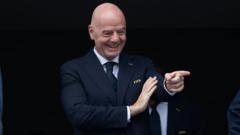
Infantino's Position Remains Strong Despite European Criticism
Gianni Infantino, the FIFA president who has held the position for over a decade, continues to maintain a firm stance regarding international intervention in football matters. Despite mounting Infantino Trump intervention controversies sweeping across European nations, the Swiss executive appears largely unaffected by the mounting criticism directed at his leadership decisions.
The ongoing debate surrounding Infantino Trump intervention has sparked considerable tension within European football circles, yet officials close to the FIFA president suggest his position remains considerably stable. This resilience stems from his established political alliances and institutional support networks that have been cultivated throughout his tenure since 2016.
The Balogun Controversy and Its Implications
The Folarin Balogun case has emerged as a central point of contention within European football governance discussions. The English footballer's eligibility dispute has become intertwined with broader questions about FIFA's regulatory framework and international political pressure. However, sources indicate that Gianni Infantino FIFA president has compartmentalized this controversy from wider governance issues.
This situation represents just one element in a complex landscape of challenges facing modern football administration. The intersection of sports governance and geopolitical pressures has created unprecedented complications for FIFA's leadership structure. Infantino's approach has been to maintain administrative continuity while navigating these turbulent waters with calculated political maneuvering.
European Nations Express Concerns
Football associations across Europe have formally voiced their disapproval regarding what they perceive as inappropriate external interference in the sport's organizational matters. The European backlash FIFA reflects deeper anxieties about sovereignty and decision-making autonomy within continental football governance bodies.
Multiple European federations have issued statements questioning the transparency and legitimacy of recent FIFA directives. These organizations argue that external pressure from non-football entities threatens the integrity of the game's regulatory framework. Despite these objections, the institutions supporting Infantino suggest that this criticism, while vocal, lacks sufficient institutional weight to challenge his authority effectively.
Political Alliances Sustaining Infantino's Authority
Infantino's decade-long presidency has been characterized by strategic coalition-building among powerful football confederations worldwide. His support network extends beyond European boundaries, encompassing influential stakeholders from African, Asian, and Latin American football organizations. This geographically diversified backing provides substantial insulation against regional criticism.
The FIFA Trump politics dimension adds complexity to traditional football governance dynamics. International political actors now frequently intersect with sports administrative decisions, creating unprecedented challenges for sports executives. Infantino's navigation of these treacherous waters suggests he possesses considerable political acumen and institutional support mechanisms.
Future Outlook and Remaining Challenges
While the European backlash FIFA demonstrates genuine discontent among certain football stakeholders, analysts suggest this dissatisfaction insufficient to destabilize Infantino's current position. His reelection prospects remain relatively secure, barring unforeseen major institutional shifts.
The cumulative effect of controversies, including the Balogun situation and external political pressures, has undoubtedly created additional scrutiny surrounding FIFA's operations. However, organizational inertia, allied support networks, and institutional entrenchment appear to provide Infantino with substantial protective mechanisms against serious threats to his authority.
Structural Factors Behind Infantino's Resilience
FIFA's organizational structure includes executive councils and governance frameworks that, while responsive to legitimate concerns, generally maintain continuity during periods of external pressure. The global confederation's vast financial resources and regulatory authority create significant barriers to sudden leadership transitions. Infantino's institutional position appears solidified by these structural realities.
Moreover, the absence of a compelling alternative candidate to challenge Gianni Infantino FIFA president during upcoming elections further strengthens his hand. Football stakeholders worldwide must calculate political costs of supporting potential challengers, making incumbent advantage particularly pronounced in FIFA governance contexts. These structural considerations ultimately suggest that European discontent, while significant symbolically, lacks practical capacity to alter FIFA's current executive arrangements substantially.