
Infantino Faces Non-Cooperation Threat From FIFA Opponents
FIFA president Gianni Infantino confronts serious non-cooperation threats from opponents unless he resigns. UEFA sources reveal escalating pressure on the governing body.
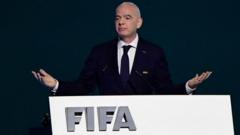
FIFA President Under Mounting Pressure
Gianni Infantino is encountering unprecedented resistance from prominent adversaries within the international football community who are demanding his departure from FIFA leadership. Sources within UEFA have disclosed that opposition groups are leveraging the threat of non-cooperation with FIFA as a strategic pressure tactic to force Infantino's resignation from his position as the organization's president.
The escalating tensions represent a significant challenge to FIFA's operational continuity and institutional stability. Senior European football officials have made it abundantly clear that without Infantino's departure, they will pursue coordinated non-cooperation strategies that could impact FIFA's broader governance and decision-making processes.
Strategic Non-Cooperation Campaign
The non-cooperation threats constitute a sophisticated political maneuver designed to isolate Infantino within FIFA's leadership structures. By withholding cooperation on key initiatives and policy matters, opposition factions aim to demonstrate the unsustainability of his continued tenure as president. This approach targets the fundamental functioning of FIFA's various committees and administrative divisions.
UEFA representatives have indicated that such non-cooperation would affect multiple operational domains. The campaign targets FIFA's ability to coordinate international football competitions, implement governance reforms, and maintain consensus among continental football confederations. This coordinated resistance underscores the depth of dissatisfaction among European football authorities regarding Infantino's leadership direction.
Background to the Conflict
The opposition movement reflects broader frustrations within global football governance circles regarding Infantino's management style and strategic decisions affecting the sport's international landscape. European football authorities have emerged as the most vocal critics, leveraging their substantial influence to challenge his administrative authority and policy implementations across FIFA's institutional framework.
These tensions have been developing gradually, with mounting criticism concerning various FIFA initiatives and their alignment with traditional governance principles embraced by European confederations. The explicit threat of non-cooperation marks an intensification of previous disagreements into concrete tactical action.
Potential Consequences for FIFA
The prospect of non-cooperation from major football confederations poses serious operational risks for FIFA's institutional functioning. Should UEFA and allied organizations implement such measures, critical football governance mechanisms could face significant disruption. International competition coordination, regulatory enforcement, and policy development processes would all potentially be compromised.
The non-cooperation threat represents a dramatic escalation from standard diplomatic disagreements to concrete resistance that could undermine FIFA's legitimacy and operational capacity. The organization faces a critical juncture where internal consensus appears increasingly elusive under Infantino's current leadership structure.
European Football's Position
UEFA's role as the primary voice articulating this opposition demonstrates the geographical concentration of resistance against Infantino. European football confederations command substantial voting power and institutional influence within FIFA's broader governance architecture. Their threat of non-cooperation carries significant weight given UEFA's historical importance and economic significance within international football.
The disclosure from senior UEFA sources signals that opposition factions are willing to escalate beyond verbal criticism toward concrete institutional resistance. This represents a substantial political risk factor for FIFA's operational continuity and the president's tenure sustainability moving forward.