
Forest Fire Spreads Overnight: Residents Abandon Vehicles in Emergency
Forest firefighting operations continue through the night as residents flee the area. Abandoned cars spotted as wildfires intensify. Latest updates on the emergency response.
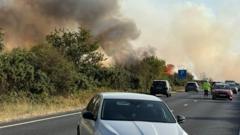
Firefighting Operations Intensify Through the Night
Forest firefighting efforts are set to continue overnight as emergency crews battle an escalating wildfire that has prompted widespread evacuations. The situation intensified on Sunday when the forest fire began spreading rapidly through residential areas, forcing families to flee their homes and leave behind personal vehicles in their desperate escape.
The overnight forest firefighting operations represent a critical phase in containing what has become one of the most significant fire incidents in recent memory. Firefighting teams remain deployed across the affected region, working through extended hours to prevent further property damage and protect lives.
Residents' Harrowing Accounts of the Emergency
One local resident recounted a terrifying experience as the forest fire advanced toward her neighborhood. She described the moment when she realized her family's vehicle might become engulfed in flames as the fire took hold on Sunday afternoon. Her account highlights the speed at which the wildfire spread through the community, leaving residents only moments to evacuate.
Abandoned Vehicles Left Behind
As families rushed to safety, numerous cars were abandoned throughout the evacuation zone. These vehicles remain stranded in areas now threatened by the advancing flames. The abandoned vehicles serve as a stark reminder of the panic and urgency that gripped residents as they prioritized their safety over their possessions.
Forest Fire Response and Resource Deployment
Emergency management officials have mobilized extensive resources to combat the forest firefighting challenge. Multiple firefighting crews, aerial support units, and equipment have been deployed to strategic locations across the affected region. The decision to maintain continuous forest firefighting operations through the night demonstrates the severity of the situation and the commitment of emergency responders.
Firefighting teams are utilizing both ground-based tactics and aerial water drops to contain the blaze. The overnight forest firefighting strategy focuses on creating firebreaks and protecting structures in the path of the advancing wildfire. Despite challenging weather conditions and difficult terrain, crews remain focused on their mission.
Community Impact and Evacuation Status
The forest fire has forced the evacuation of multiple neighborhoods and communities in the surrounding areas. Authorities have established evacuation zones and are urging residents to leave immediately if they have not already done so. Emergency shelters have been opened to accommodate displaced families.
Local officials have emphasized that the forest firefighting operation remains fluid and dynamic. As conditions change and the fire's path becomes clearer, evacuation orders may be updated. Residents are advised to monitor official channels for the latest information and to follow all directives from emergency personnel.
Infrastructure and Property Threats
Beyond residential areas, the forest fire threatens critical infrastructure and natural resources. Firefighting crews are working to protect communication towers, power lines, and water facilities that serve the broader region. The forest firefighting effort encompasses not only saving homes but also preserving essential community services.
Economic and Environmental Implications
The environmental impact of the forest fire extends beyond immediate property damage. Wildlife habitats are being destroyed, and air quality has deteriorated significantly throughout the region. The forest firefighting response must balance immediate safety concerns with longer-term ecological recovery considerations.
Ongoing Monitoring and Future Outlook
As forest firefighting operations continue overnight, meteorological forecasts will play a crucial role in predicting the fire's behavior. Wind patterns, humidity levels, and temperature fluctuations can dramatically affect how rapidly the forest fire spreads. Emergency management officials are closely monitoring these factors to adjust their forest firefighting strategy accordingly.
The overnight forest firefighting effort represents a critical window in which crews can make significant progress. Cooler nighttime temperatures may provide some advantage, allowing firefighting teams to gain ground against the advancing flames. However, officials caution that the situation remains extremely dangerous and unpredictable.
Residents should remain prepared to evacuate if conditions worsen or if new evacuation orders are issued. Keeping vehicles fueled, important documents accessible, and emergency supplies ready can make a significant difference if rapid evacuation becomes necessary. The safety of human life remains the top priority throughout the ongoing forest firefighting operation.