
Federal Probe Into Fatal Tesla Crash in Texas Home
US federal authorities investigate deadly Tesla collision after vehicle struck Texas residence. Self-driving technology under scrutiny in fatal accident investigation.
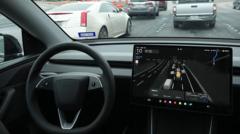
Tesla Crash Sparks Federal Investigation
US federal regulators have launched a formal investigation into a Tesla crash that resulted in a fatality after the vehicle collided with a residential property in Texas. The incident has raised critical questions about the safety protocols surrounding advanced driver assistance systems and their role in preventing catastrophic accidents.
Details of the Incident
On Friday, a Tesla crash occurred when the vehicle accelerated into a Texas home. The driver claimed to have activated the vehicle's 'self-driving' capability at the time of the collision. The impact resulted in significant property damage and the death of an individual, prompting immediate attention from federal safety authorities.
Self-Driving Technology Under Scrutiny
The driver's statement regarding the activation of Tesla's autonomous driving features has become central to the federal investigation. Investigators are examining whether the self-driving system malfunctioned, whether the driver misused the technology, or whether inadequate safety warnings contributed to the tragic outcome. The Tesla crash underscores ongoing concerns within the automotive industry regarding the limitations and proper deployment of semi-autonomous driving technologies.
Federal Safety Authority Response
Regulatory agencies have indicated that this incident represents a critical case study in vehicle automation safety. The investigation will focus on multiple factors including system design, user interface clarity, and whether appropriate safeguards were in place to prevent misuse. Preliminary reports suggest that the vehicle's speed at impact exceeded normal residential area limits, raising questions about whether safety interventions failed.
Investigation Scope and Timeline
Federal investigators are collecting data from the Tesla's onboard computer systems, which record vehicle performance, driver inputs, and system status. This technical analysis will help determine whether the self-driving technology functioned as designed. The investigation will also examine Tesla's software updates, training materials, and warning systems that drivers receive upon activating autonomous features.
Implications for Autonomous Vehicle Development
The Tesla crash investigation carries significant implications for the broader automotive industry. As manufacturers continue developing and deploying increasingly autonomous technologies, questions arise about liability, driver responsibility, and the need for enhanced safety standards. This incident may influence regulatory decisions regarding how companies market and distribute semi-autonomous driving capabilities.
Driver Responsibility and System Limitations
Central to the investigation is determining the driver's understanding of system limitations. Tesla's self-driving technology, officially termed Autopilot, requires continuous driver attention and maintains that the driver remains responsible for vehicle control. However, consumer understanding of these limitations varies significantly, leading to questions about whether marketing and user education are adequate.
Safety Standards Moving Forward
The incident has reignited debates among safety advocates, engineers, and policymakers regarding appropriate standards for autonomous vehicle testing and deployment. Some experts argue for mandatory independent testing, clearer labeling of system capabilities, and stricter liability frameworks. Others emphasize that human driver error remains the leading cause of traffic fatalities.
Previous Safety Concerns
This Tesla crash investigation occurs amid a series of previous incidents involving Tesla vehicles and autonomous driving features. Regulatory agencies have previously examined similar cases where Autopilot activation preceded accidents. These investigations have revealed patterns worth studying as the industry evolves.
Manufacturer Response and Industry Standards
Tesla has consistently emphasized that its Autopilot system requires driver supervision and is not a fully autonomous system. The company maintains detailed guidelines for proper use of the technology. However, the disconnect between technical capability and consumer perception continues to complicate these discussions.
Regulatory Framework Evolution
Current regulations have struggled to keep pace with autonomous vehicle technology advancement. The federal investigation into this Tesla crash may catalyze regulatory changes requiring manufacturers to implement additional safety features, provide enhanced driver training, or restructure how these systems are marketed to consumers.
Conclusion
The federal investigation into the Tesla crash represents a crucial moment for autonomous vehicle safety standards. As regulators examine the facts and circumstances surrounding this tragedy, the outcomes may significantly influence how companies develop, deploy, and market semi-autonomous driving technologies in the future. The incident serves as a sobering reminder that technological advancement must be matched with comprehensive safety protocols and clear communication of system limitations.