
Farage's Rivals Decline Entry in Clacton By-Election Contest
Reform UK leader Farage seeks 'establishment versus people' showdown in Clacton by-election, while Labour dismisses it as a circus. Key rivals announce withdrawal.
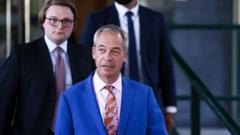
Clacton By-Election Takes Center Stage as Political Drama Unfolds
The Clacton by-election has become a focal point of political tension as major political figures publicly announce their positions regarding the contest. Reform UK leader Nigel Farage has articulated a distinctive vision for the electoral battle, framing it as a fundamental clash between establishment politics and grassroots sentiment. However, this characterization has drawn sharp criticism from opposing parties, particularly Labour, which dismisses the framing as theatrical and dismissive of legitimate political discourse.
Farage's Vision for the Electoral Confrontation
Farage has positioned the Clacton by-election as more than a routine parliamentary contest. The Reform UK leader has explicitly stated his desire to transform the electoral battle into what he describes as an "establishment versus the people by-election." This strategic messaging reflects his broader political philosophy that challenges traditional Westminster structures and emphasizes direct representation of voter interests. According to Farage's perspective, the by-election represents an opportunity to demonstrate public dissatisfaction with conventional political establishments and their decision-making processes.
Strategic Messaging and Political Positioning
The Reform UK leader's framing of the Clacton by-election reveals a calculated political strategy aimed at mobilizing specific voter demographics. By emphasizing the populist contrast between establishment elites and ordinary citizens, Farage seeks to energize his base and attract disaffected voters from traditional parties. This messaging strategy has been central to Reform UK's broader political positioning and reflects the party's consistent emphasis on challenging Westminster conventions.
Labour's Critical Response to the Clacton By-Election Narrative
Labour representatives have responded with considerable skepticism to Farage's characterization of the Clacton by-election. Rather than engaging with the establishment versus people framework, Labour has employed more dismissive language, describing the entire electoral contest as a "circus." This terminology suggests Labour views the proceedings as more theatrical performance than substantive political engagement, questioning the legitimacy and seriousness of the competing narratives surrounding the by-election.
Party Positions and Electoral Strategy
Labour's decision to characterize the Clacton by-election as a circus reflects broader party frustrations with what they perceive as sensationalized political discourse. By using this language, Labour appears to be attempting to delegitimize Farage's framing while simultaneously distancing itself from the electoral contest's perceived excessive theatricality. The party's approach suggests a strategy focused on emphasizing substantive policy differences rather than engaging with populist rhetoric.
Rivals Rule Out Participation in the Clacton By-Election
Multiple political rivals have announced their decision to withdraw from competing in the Clacton by-election, marking a significant development in the electoral landscape. These announcements reshape the competitive dynamics of the contest and potentially influence how the electoral battle will unfold. The withdrawal decisions suggest calculation among rival politicians regarding resource allocation, electoral viability, and strategic positioning within their respective parties.
Impact on Electoral Competition
When major political rivals rule out standing in the Clacton by-election, the decision fundamentally alters the contest's nature and potential outcomes. Fewer competing candidates typically concentrate voter attention and resources, potentially strengthening the campaigns of those remaining in the race. The strategic calculation behind these withdrawal announcements reflects consideration of broader party interests beyond the immediate Clacton by-election context.
Broader Political Implications of the Clacton By-Election
The Clacton by-election extends beyond local constituency concerns to represent broader trends in contemporary British politics. The contest highlights tensions between populist and establishment political narratives, demonstrates strategic party positioning, and reveals shifting voter allegiances. The by-election will likely serve as an important indicator of public sentiment regarding major political parties and their respective messages.
The decision by major rivals to abstain from the Clacton by-election, combined with Labour's dismissive characterization and Farage's populist framing, creates a unique electoral environment. This convergence of political positioning offers insights into how different parties understand voter priorities and how they strategize electoral competition. The outcome of the Clacton by-election may influence subsequent political strategy across multiple parties.
Electoral Context and Future Considerations
Understanding the Clacton by-election requires appreciation of its specific electoral context and implications for British parliamentary politics. The by-election serves as a platform for political messaging, a test of electoral machinery, and potentially an indicator of broader shifts in voter behavior. As political rivals announce their positions regarding participation in the Clacton by-election, the contest itself becomes increasingly defined by the choices made by major political figures and organizations.