
Canada Must Stand Firm Against US Trade Demands, Says Manitoba Leader
Manitoba Premier Wab Kinew urges Canada to resist pressure as US trade deadline approaches. Prime Minister Mark Carney faces challenges securing public support for potential deal.
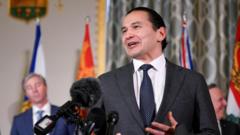
Manitoba Premier Calls for Strong Canadian Position in Trade Negotiations
The ongoing discussions surrounding the US trade deadline Canada situation have intensified, with regional leaders expressing their views on how the nation should approach these critical negotiations. Manitoba's Premier Wab Kinew has made it clear that Canada must adopt a resolute stance when dealing with American pressure, signaling that compromise may not be the best path forward in these discussions.
Kinew's recent remarks represent a significant position that could complicate Prime Minister Mark Carney's efforts to build consensus among Canadians regarding a potential trade agreement with the United States. The premier's forceful language suggests that provincial leaders are not prepared to accept unfavorable terms without considerable pushback.
The Challenge for Prime Minister Mark Carney
Prime Minister Mark Carney faces a considerable hurdle in his attempt to garner public and political support for any upcoming trade arrangement with the US. The comments from Manitoba's leader underscore the complexity of building a unified Canadian response to American trade demands. Kinew's stance indicates that different provinces may have varying perspectives on what constitutes an acceptable agreement.
The timing of these statements is particularly significant, as the Canada US trade negotiations are occurring under considerable time pressure. With a specific deadline looming from the American side, Canadian officials must balance the need for swift action with the requirement to satisfy domestic stakeholders who hold diverse interests and concerns.
Provincial Leadership Weighs In on Trade Strategy
Manitoba's Premier has positioned himself as a vocal advocate for a tougher negotiating approach. His comments reflect growing concern among regional leaders that Canada might be forced to make excessive concessions simply due to time constraints imposed by the American administration. This perspective challenges the notion that speed of negotiation should take precedence over securing favorable terms.
Kinew's remarks suggest that Canadian provinces should have a meaningful voice in shaping the nation's trade policy. The federal government must contend with these diverse viewpoints while simultaneously managing external pressure from the United States. This multifaceted challenge requires skilled diplomacy and clear communication about Canada's core interests and red lines.
Understanding the Broader Context
The current trade tensions between Canada and the United States reflect broader economic and political dynamics affecting North America. Several industries, including agriculture, manufacturing, and technology, have significant stakes in how these negotiations conclude. The stakes are particularly high for regions like Manitoba, which relies heavily on cross-border trade relationships.
Trade disputes can have far-reaching consequences for employment, consumer prices, and business investment across Canada. This reality explains why provincial leaders like Kinew are speaking out with such conviction. They recognize that the decisions made during these negotiations will impact their constituents for years to come.
The Role of Public Opinion in Trade Negotiations
For Prime Minister Mark Carney, securing public buy-in represents a critical component of any successful trade strategy. Without broad support among Canadians, any agreement reached could face significant legal, political, or implementation challenges. Kinew's comments serve as a reminder that public sentiment cannot be ignored in these high-stakes discussions.
The premier's willingness to publicly challenge what might be perceived as a soft approach reflects confidence that many Canadians share his concerns about maintaining Canadian sovereignty and protecting domestic interests. Building consensus requires transparent communication about what is being negotiated, what Canada hopes to achieve, and what the potential consequences might be.
Looking Ahead: Next Steps and Implications
As the US trade deadline approaches, the pressure on Canadian negotiators will only increase. Provincial leaders will continue to voice their positions, and citizens will demand accountability from their elected officials. The coming weeks and months will be critical in determining whether Canada can present a unified position or whether internal disagreements will weaken its negotiating position.
The statements from Manitoba's Premier indicate that Canada's approach to these negotiations will not follow a simple or predetermined path. Instead, ongoing dialogue between federal and provincial governments, combined with public input and feedback, will shape the final outcome of these crucial trade discussions affecting the entire nation.