
BBC Demands New Funding Model Beyond Licence Fee System
The BBC reveals critical challenges in its annual report, calling for urgent funding reforms to replace the traditional licence fee model and secure its future.
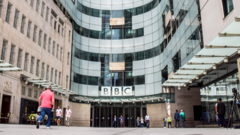
BBC Funding Crisis Sparks Call for Radical Change
The British Broadcasting Corporation has launched a comprehensive appeal for a fundamental transformation in its BBC funding model, moving away from the traditional licence fee structure that has sustained the organization for decades. According to media editor Katie Razzall, the corporation's latest annual report exposes significant operational and financial pressures that demand immediate strategic intervention.
The BBC funding model currently relies heavily on mandatory licence fees paid by households across the United Kingdom. However, the corporation's official documentation reveals that this revenue stream faces mounting challenges that threaten the organization's ability to maintain its extensive service portfolio and competitive position in the global media landscape.
Annual Report Exposes Structural Vulnerabilities
The BBC's annual report presents a detailed analysis of the obstacles confronting Britain's most established broadcaster. The document demonstrates that revenue collection from the licence fee reform has become increasingly difficult, with declining compliance rates and demographic shifts affecting the traditional funding base.
These revelations underscore the urgency of implementing alternative revenue mechanisms. The corporation argues that without substantial changes to its funding architecture, it will struggle to maintain service quality, invest in technological innovation, and compete with privately-funded streaming platforms that dominate contemporary media consumption.
Proposed Solutions and Future Directions
The BBC's call for change encompasses several potential avenues for restructuring public broadcasting funding. These proposals include exploring subscription models, supplementary advertising revenue, and government grants that could complement or replace elements of the current licence fee reform framework.
Media professionals and industry observers recognize that any fundamental shift in BBC funding model requirements will necessitate parliamentary approval and public consultation. The corporation emphasizes that maintaining editorial independence and universal access to quality content must remain central to whatever funding arrangement ultimately emerges.
Impact on Public Media Services
The challenges outlined in the annual report have direct implications for the millions of UK residents who depend on BBC services for news, entertainment, and educational programming. The corporation's current funding structure ensures that content remains accessible to all households regardless of income level, a principle that defenders of public broadcasting consider essential.
However, media finance challenges have intensified as younger audiences increasingly abandon traditional television in favor of on-demand streaming services. The BBC must simultaneously serve aging demographics who value traditional broadcasting while attracting younger viewers accustomed to digital-first content delivery.
Industry Response and Stakeholder Perspectives
Katie Razzall's analysis of the BBC annual report highlights that political parties, commercial broadcasters, and media advocacy groups hold divergent views on potential solutions. Conservative politicians argue for more flexible funding arrangements, while public service advocates warn that commercialization could compromise editorial standards and content diversity.
International comparisons provide instructive examples of alternative funding models. Public broadcasters in other European nations employ hybrid approaches combining government subsidies, advertising revenue, and viewer contributions. These models offer potential templates for British policymakers considering reforms to the current system.
Path Forward for Britain's National Broadcaster
The BBC's formal request for licence fee reform represents a watershed moment for British media policy. The corporation acknowledges that incremental adjustments prove insufficient and that comprehensive restructuring has become unavoidable. However, any transition must be managed carefully to protect the institutional integrity and editorial independence that define the BBC's identity.
The coming months will determine whether political leaders, stakeholders, and the public embrace the corporation's vision for sustainable funding reform. The outcome will shape not only the BBC's future but also the broader trajectory of public service broadcasting in the digital age.