
Aldi's $4 Almond Butter Strategy Disrupts US Grocery Market
Aldi's aggressive $9bn US expansion focuses on urban markets with budget-friendly products. Discover how the German retailer challenges Walmart's dominance with innovative pricing.
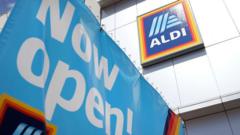
Aldi's Bold Entry into the American Grocery Landscape
The German discount retailer Aldi is making unprecedented waves in the United States grocery sector through its strategic $9 billion investment, fundamentally reshaping how consumers perceive value shopping. Aldi's US expansion represents a calculated challenge to established American supermarket giants, with particular emphasis on metropolitan areas including Manhattan and other densely populated urban centers. This offensive positioning demonstrates the company's confidence in implementing its European discount model within a traditionally competitive American market dominated by larger, more established chains.
The $4 Almond Butter Game-Changer
Central to Aldi's market disruption strategy is its competitively priced almond butter offering at just $4 per unit. This pricing represents a significant undercut compared to mainstream competitors, positioning the product as an entry point for budget-conscious consumers seeking premium nutritional products without premium pricing. The almond butter serves as a flagship example of how Aldi leverages its operational efficiency and supply chain optimization to deliver quality items at substantially reduced costs, creating immediate consumer appeal across multiple demographic segments.
Urban Market Focus and Strategic Positioning
Unlike traditional supermarket expansion strategies that emphasize suburban locations, Aldi deliberately targets urban hubs where density supports profitability and consumer preferences increasingly favor smaller-format retail environments. Manhattan and comparable metropolitan areas represent ideal launching points for Aldi's business model, where affluent consumers demonstrate willingness to adopt alternative shopping methods and value-oriented retailers find eager audiences. This geographic prioritization reflects sophisticated market analysis identifying urban consumers as particularly receptive to European-style discount retail concepts.
Can Aldi's Model Outperform Walmart?
The critical question confronting Aldi's ambitious US expansion concerns whether its European discount framework can effectively compete against Walmart's unparalleled operational scale and established infrastructure. Walmart's dominance rests upon decades of market penetration, extensive supply chain networks, and deeply entrenched consumer loyalty. However, Aldi's differentiated approach—emphasizing product quality, streamlined assortments, and superior margins through operational efficiency—potentially addresses specific market gaps that Walmart's high-volume model may underserve.
Operational Efficiency as Competitive Advantage
Aldi's capacity to offer aggressive pricing stems fundamentally from operational practices refined across European markets for decades. The retailer maintains substantially lower overhead costs through limited SKU counts, minimal promotional spending, and streamlined store formats. This operational lean-ness enables price points competitors struggle to match while maintaining profitability margins. Aldi's US expansion translates these proven European methodologies into an American context, where cost-conscious consumers increasingly prioritize value over selection abundance.
Market Reception and Consumer Trends
Early indicators suggest American consumers demonstrate receptivity to Aldi's value proposition. The company's expansion plans include hundreds of new store openings across the United States, reflecting investor confidence and anticipated consumer demand. Urban populations particularly embrace the retailer's approach, appreciating efficient shopping experiences and transparent pricing structures. This acceptance validates hypotheses that American supermarket shoppers harbor underserved demand for discount alternatives to conventional grocery formats.
Long-Term Implications for US Retail
Aldi's $9 billion investment signals potential structural transformation within American grocery retail. The company's success could accelerate consumer migration toward discount models, pressuring established competitors to reassess operational efficiency and pricing strategies. Beyond immediate competitive dynamics, Aldi's expansion demonstrates European retail sophistication gaining American market acceptance, potentially reshaping industry standards around efficiency, transparency, and value delivery.