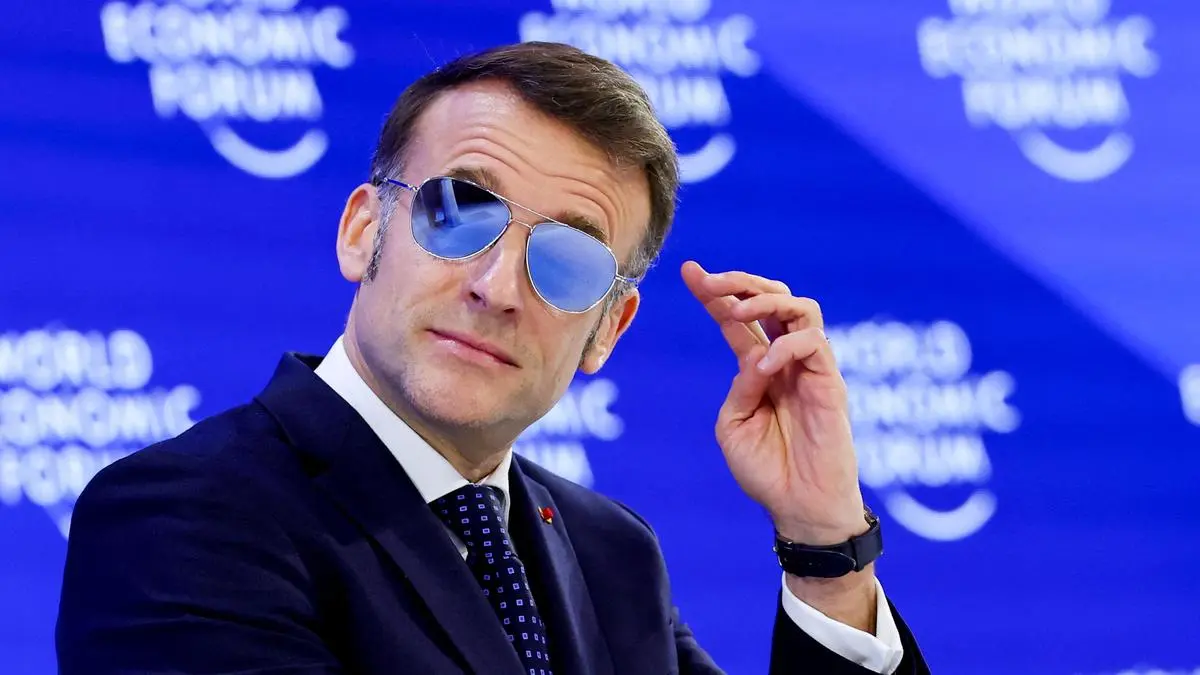
French President Emmanuel Macron has once again reaffirmed the European Union’s commitment to defending territorial sovereignty and the rule of law. In a recent statement, Macron stated that the EU would not hesitate to respond with trade sanctions if necessary, including activating its Anti-Coercion Instrument.
These remarks come at a time when the EU is facing numerous challenges, both internally and externally. The rise of authoritarian regimes and the use of coercive tactics by some countries have raised concerns about the EU’s ability to protect its members’ sovereignty and uphold the rule of law.
Macron’s strong stance on this issue is a clear message to those who seek to undermine the EU’s values and principles. The French President emphasized that the EU would not tolerate any attempts to coerce or intimidate its member states. He also stressed that the EU would use all the tools at its disposal to protect its interests and those of its citizens.
One of these tools is the Anti-Coercion Instrument, which was adopted by the EU in 2019. This instrument allows the EU to impose trade sanctions on countries that engage in coercive actions against its member states. These sanctions can include restrictions on imports, exports, and investments, and can have a significant impact on the targeted country’s economy.
The activation of this instrument would send a strong message to any country that tries to interfere in the internal affairs of EU member states. It would also serve as a deterrent to any potential aggressor, demonstrating that the EU is united and ready to defend its interests.
Macron’s words also highlight the importance of the EU’s role as a defender of the rule of law. The EU has a long history of promoting democracy, human rights, and the rule of law within its borders and beyond. These values are at the core of the EU’s identity and are essential for maintaining peace and stability in the region.
Unfortunately, some countries have been using coercive tactics to undermine the rule of law and democracy in the EU. This includes cyberattacks, disinformation campaigns, and economic pressure. The EU has already taken action against these countries, but Macron’s statement is a clear indication that the EU will not back down in the face of such threats.
Furthermore, Macron’s remarks also serve as a reminder of the EU’s commitment to its member states’ territorial integrity. The EU has always stood by its members in times of crisis, whether it be a natural disaster or an attack on their sovereignty. Macron’s statement reaffirms this commitment and sends a message of solidarity to all EU member states.
In conclusion, Macron’s strong words regarding the EU’s defense of territorial sovereignty and the rule of law are a positive sign for the future of the EU. They demonstrate the EU’s determination to protect its values and interests, and its willingness to take action against any country that seeks to undermine them. The activation of the Anti-Coercion Instrument would be a significant step in this direction and would show the world that the EU is a united and powerful force to be reckoned with.