
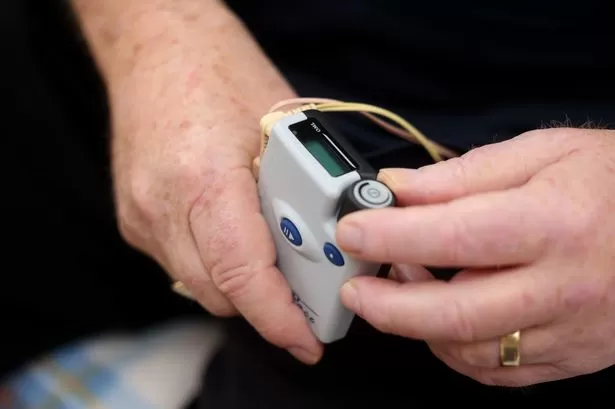
The world of medical technology has seen a groundbreaking device that has been transformative for patients diagnosed with Parkinson’s disease. This device has brought hope and relief to many, including Malcolm Sims, who has been battling this debilitating disease.
Parkinson’s disease is a progressive neurological disorder that affects movement and coordination. It is caused by the loss of dopamine-producing cells in the brain, leading to symptoms such as tremors, stiffness, and difficulty with balance and coordination. This disease not only affects the physical abilities of a person but also takes a toll on their mental and emotional well-being.
Malcolm Sims, a 62-year-old retired teacher, was diagnosed with Parkinson’s disease five years ago. He recalls the day he received the diagnosis as one of the darkest days of his life. He had always been an active person, and the thought of losing control of his body was terrifying. Malcolm’s wife, Sarah, was his pillar of strength, but they both knew that the road ahead was going to be challenging.
For the next few years, Malcolm’s condition gradually worsened. Simple tasks like getting dressed, eating, and even walking became a struggle. He had to rely on Sarah and their children for everything. The once independent and active man was now confined to a wheelchair, and it was heartbreaking for his family to see him suffer.
However, everything changed when Malcolm’s doctor recommended a new device that could potentially improve his symptoms. The device, called deep brain stimulation (DBS), involves implanting electrodes in specific areas of the brain and connecting them to a small device placed under the skin in the chest. This device sends electrical impulses to the brain, which can help control the symptoms of Parkinson’s disease.
Malcolm was hesitant at first, but with the support of his family, he decided to go through with the procedure. The surgery was a success, and Malcolm could already feel a difference in his symptoms. He was able to move his limbs more freely, and his tremors had significantly reduced. The real transformation, however, came a few weeks after the surgery when the device was turned on.
Malcolm could not believe the change in his body. He was able to walk without assistance, and his movements were more fluid. He could even write his name, something he had not been able to do in years. The joy and relief on his face were evident, and his family could not hold back their tears of happiness.
The DBS device has been a game-changer for Malcolm. He can now do things he never thought possible, like gardening and playing with his grandchildren. He has also been able to reduce his medication, which had many side effects, and is now able to enjoy a better quality of life.
But the benefits of the DBS device go beyond physical improvements. Malcolm’s mental and emotional well-being has also improved significantly. He no longer feels like a burden to his family, and he has regained his independence. He is also more optimistic about the future and is determined to make the most out of every day.
Malcolm’s story is just one of many success stories of the DBS device. This groundbreaking technology has been transformative for many patients with Parkinson’s disease. It has given them a new lease on life and has allowed them to regain control over their bodies.
The DBS device is not a cure for Parkinson’s disease, but it has been a life-changing treatment for many. It has shown that with advancements in medical technology, there is hope for those battling this disease. It has also opened doors for further research and development in the field of Parkinson’s treatment.
Malcolm’s journey with Parkinson’s disease has been a rollercoaster of emotions, but the DBS device has been a ray of hope in the darkness. He is grateful to have been given the opportunity to improve his quality of life and is determined to make the most out of every day. His message to others battling Parkinson’s disease is to never lose hope and to always keep fighting.
In conclusion, the DBS device has been a transformative and life-changing treatment for patients with Parkinson’s disease. It has given them a chance to regain control over their bodies and live a better quality of life. Malcolm Sims’ story is a testament to the power of medical technology and the hope it brings to those in need. Let us continue to support and celebrate these groundbreaking advancements in the medical field, as they have the potential to change lives and bring hope to those who need it the most.