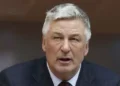
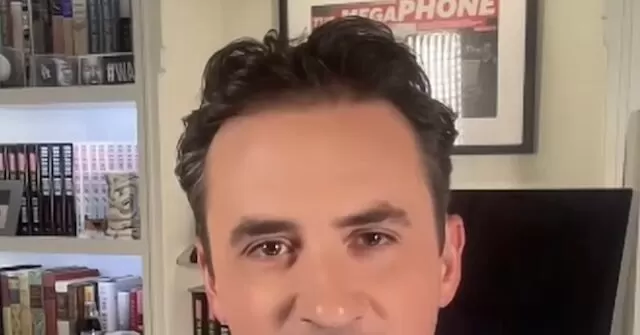
In a recent appearance on Fox News Channel’s “The Ingraham Angle,” Breitbart Editor-in-Chief Alex Marlow made a bold statement about the European Union (EU). According to Marlow, the EU is not just a political and economic union, but a superstate that engages in draconian censorship. This statement has sparked a heated debate about the role of the EU in regulating free speech and expression.
Marlow’s comments came in response to a question about the EU’s recent decision to fine Google for antitrust violations. He argued that the EU’s actions were not just about competition, but also about controlling the flow of information and stifling dissenting voices. Marlow pointed to the EU’s controversial “right to be forgotten” law, which allows individuals to request that search engines remove links to information about them. He also highlighted the EU’s efforts to regulate online hate speech and misinformation, which he believes are being used to silence conservative viewpoints.
Marlow’s criticism of the EU’s censorship practices is not unfounded. In recent years, the EU has taken a more aggressive approach to regulating online content, particularly in the areas of hate speech and fake news. While these efforts may be well-intentioned, they have raised concerns about the impact on free speech and the ability to engage in open and honest debate.
One of the main arguments against the EU’s censorship practices is that they are often vague and subjective. What constitutes hate speech or fake news is often open to interpretation, and this leaves room for abuse and censorship of legitimate viewpoints. This is especially concerning for those who hold minority or dissenting opinions, as they may be targeted and silenced by those in power.
Furthermore, the EU’s censorship practices have been criticized for being one-sided and biased. Many have pointed out that the EU seems to be more focused on silencing conservative voices, while turning a blind eye to similar offenses from those on the left. This has led to accusations of political censorship and a lack of fairness in the EU’s approach to regulating online content.
Marlow’s comments have brought much-needed attention to the issue of censorship in the EU. While some may argue that the EU has a responsibility to protect its citizens from harmful content, it is important to remember that censorship is a slippery slope. Once we start limiting free speech and expression, it becomes easier to justify further restrictions and control.
It is also worth noting that the EU’s censorship practices may have unintended consequences. By limiting the diversity of opinions and ideas, the EU may be hindering the growth and progress of its citizens. In a world where innovation and progress are driven by open and free exchange of ideas, censorship can have a detrimental effect on society as a whole.
In conclusion, Alex Marlow’s statement about the EU being a superstate engaging in draconian censorship has sparked an important conversation about the role of the EU in regulating free speech and expression. While the EU may have good intentions in its efforts to protect its citizens, it is important to carefully consider the impact of censorship on our fundamental rights and freedoms. As citizens, we must remain vigilant and hold our leaders accountable to ensure that our voices are not silenced in the name of political correctness.