
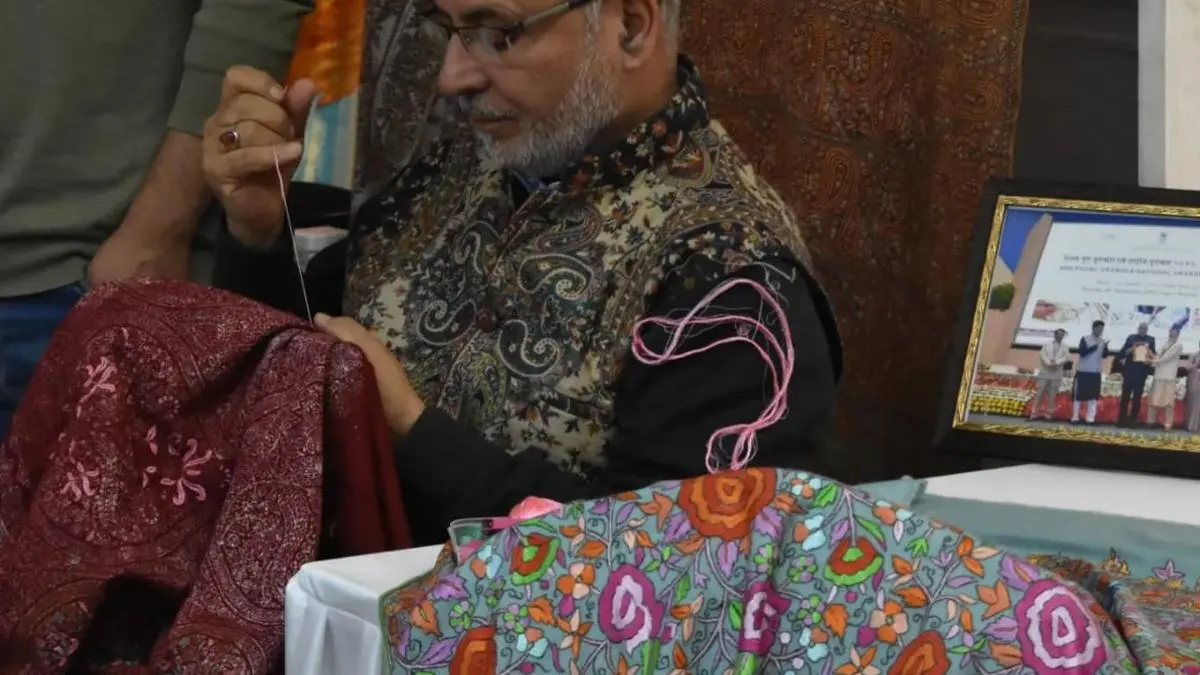
The Pashmina shawl industry in Kashmir has been a source of pride and livelihood for many generations. Known for its exquisite craftsmanship and luxury, Pashmina shawls have been a symbol of Kashmir’s rich cultural heritage. However, recent government data has revealed a sharp decline in the number of Pashmina shawl weavers in the region.
According to the data, in 2016-17 there were only about 10,000 people involved in shawl making in Kashmir, compared to a staggering 100,300 in 2007-08. This decline in numbers has raised concerns among the government and local communities, as the Pashmina industry has been a major contributor to the economy of Kashmir.
So, what could be the reasons behind this decline? There are several factors that have contributed to this alarming situation. The first and foremost being the lack of interest among the younger generation in taking up the craft. With the rapid growth and availability of other job opportunities, the traditional art of Pashmina weaving has lost its charm among the youth.
Moreover, the increasing cost of raw materials, such as the rare and fine Pashmina wool, has also made it difficult for the weavers to sustain their business. The high cost of living and lack of financial support from the government has further added to their struggles. This has also led to many weavers abandoning their trade and seeking other means of income.
Furthermore, the growing competition from cheaper, machine-made shawls has also affected the demand for hand-woven Pashmina shawls. These machine-made shawls may not possess the same quality and finesse as the hand-woven ones, but they are more affordable for the general public. This has led to a decline in the demand for traditional Pashmina shawls, further affecting the livelihood of weavers.
The decline in Pashmina shawl weavers also has a much deeper impact on the social and cultural fabric of Kashmir. Pashmina weaving has been a way of life for many communities in the region, passed down from one generation to the next. It is not just a means of livelihood, but also a way of preserving cultural traditions and heritage. With the decline in numbers, there is a risk of losing this precious art form forever.
However, amidst all these challenges, there is still hope for the Pashmina industry in Kashmir. The government and various organizations have taken note of the situation and are taking steps to improve the conditions. The government has announced various schemes and subsidies to support the Pashmina weavers and encourage the younger generation to take up the craft.
Moreover, initiatives like skill development programs and training workshops are being conducted to provide the weavers with new techniques and designs, making their products more appealing to the market. This will not only help in reviving the Pashmina industry but also make it more sustainable for the future.
In addition to this, there is a growing demand for sustainable and handmade products in the global market. This presents a great opportunity for the Pashmina industry in Kashmir to market its products to a wider audience and increase its profits. With the right support and marketing strategies, the Pashmina industry can once again flourish and reclaim its position as a major contributor to the economy of Kashmir.
It is also the responsibility of the consumers to be mindful of their choices and support traditional crafts like Pashmina weaving. By purchasing hand-woven Pashmina shawls, we can not only contribute to the livelihood of the weavers but also help in preserving this beautiful art form for future generations.
In conclusion, the decline in the number of Pashmina shawl weavers in Kashmir is a cause for concern, but with the right support and initiatives, it can be reversed. It is important for the government, organizations, and the general public to come together and work towards the revival of this traditional craft. Let us all join hands and support the Pashmina weavers of Kashmir, and help them continue their legacy of creating exquisite and timeless pieces of art.