
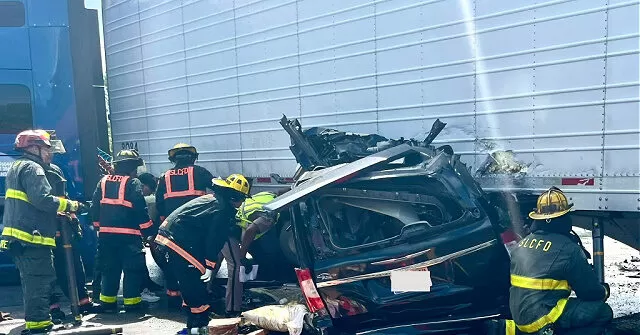
A recent report published by American Truckers United has revealed a concerning trend in the trucking industry – a surge in the employment of drivers who are not proficient in reading and understanding English. This trend, particularly prevalent in the state of Texas, is causing major safety concerns and has been linked to several fatal crashes, including one in the state’s capital city earlier this year.
The report, which analyzed data from trucking companies across the nation, found that Texas companies top the list in hiring non-English speaking drivers. This alarming trend shines a light on the potential consequences of language barriers in the trucking industry, especially when it comes to safety on the roads.
One of the most significant concerns raised by this report is the impact on communication between drivers and law enforcement officials. Accidents involving trucks require prompt and clear communication to assess the situation and ensure the safety of those involved. However, if a non-English speaking driver is unable to communicate effectively with first responders, it can create confusion and hinder the rescue efforts. This delay can prove fatal in critical situations, as every second counts.
Moreover, the inability to read and understand English also poses a threat to the safety of the driver and other motorists on the road. Many road signs, instructions, and safety protocols are written in English, making it crucial for drivers to have a basic understanding of the language to navigate the roads safely. Accidents caused by misinterpretation of signs or failure to follow instructions can have devastating consequences.
The recent fatal crash in the capital city of Texas, involving a non-English speaking truck driver, further highlights the urgency of addressing this issue. The crash claimed multiple lives and caused extensive damage to property, leaving the city in a state of shock and grief. The incident prompted a thorough investigation, and it was discovered that the driver’s limited understanding of English had played a significant role in the crash.
The trucking industry has seen a surge in demand over the years, with an estimated 3.5 million truck drivers operating on U.S. roads. With this increase in demand, it has become crucial to ensure that all drivers possess the necessary skills and qualifications to operate a commercial vehicle safely. The issue of language proficiency has been a long-standing concern, and it is time for the industry to take action to address it.
While Texas may currently have the most significant number of non-English speaking drivers, this is a nationwide issue that demands immediate attention. The recent report by American Truckers United must serve as a wake-up call for all trucking companies to prioritize language proficiency when hiring drivers. This not only ensures the safety of all those on the road but also promotes professionalism and efficiency within the industry.
Fortunately, there are steps that can be taken to address this problem. One solution is the implementation of language proficiency tests during the hiring process. This will ensure that all drivers possess the required level of understanding to navigate the roads safely. Additionally, companies can provide language training programs for their existing drivers to improve their communication skills and promote a culture of inclusivity and diversity within the industry.
Moreover, the government can also play a vital role in addressing this issue. They can encourage trucking companies to invest in language training programs and provide incentives for companies that prioritize language proficiency in their hiring process. The government can also introduce strict regulations that make it mandatory for all truck drivers to possess a certain level of English proficiency to operate on the roads.
In conclusion, the surge in the employment of non-English speaking drivers in the trucking industry is a silent threat that must be addressed before it leads to more tragic accidents. It is time for the industry and the government to come together and take the necessary action to ensure the safety of all those on the roads. Let us not wait for another fatal crash to occur before we take action. The safety of our roads and communities depends on it.