
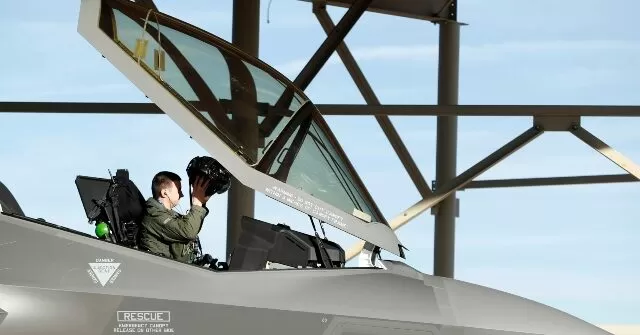
In a groundbreaking test, Air Force and Navy fighter pilots have taken directions from an AI system for the first time. This test could potentially revolutionize combat tactics and pave the way for a new era of warfare.
The test, which was conducted by the United States Air Force and Navy, involved a group of fighter pilots taking orders from an AI “Air Battle Manager.” This AI system, developed by the Air Force Research Laboratory, was designed to provide real-time tactical command and control for air missions.
Traditionally, fighter pilots have relied on human commanders to guide them in combat situations. However, with the advancement of technology, the military is exploring the use of AI systems to assist and enhance human decision-making in critical situations.
During the test, the AI system was responsible for monitoring and analyzing data from various sources, including radar, satellites, and other aircraft. It then provided the pilots with real-time recommendations and directions, allowing them to make split-second decisions with a higher level of accuracy.
The results of the test were impressive. The pilots were able to successfully complete their missions with the help of the AI system, showcasing the effectiveness and potential of this technology in combat situations.
The use of AI in military operations is not a new concept. In recent years, there has been a significant increase in the use of unmanned drones and other autonomous systems in combat. However, this test marks the first time that AI has been used to provide direct guidance to human pilots in real-time.
The potential benefits of incorporating AI into combat operations are numerous. With the ability to process vast amounts of data and make split-second decisions, AI can enhance the speed and accuracy of military operations. It can also reduce the risk to human lives by taking on dangerous tasks and providing critical support to human troops.
The success of this test has caught the attention of military experts and leaders worldwide. It is clear that AI technology has the potential to change the way wars are fought and won. As the United States continues to invest in and develop this technology, it is likely that other countries will follow suit, leading to a new arms race in the field of AI.
However, some experts have raised concerns about the use of AI in combat. There are fears that relying too heavily on AI systems could lead to a loss of human control and decision-making in critical situations. There are also ethical considerations, such as the potential for AI to make mistakes or cause harm to civilians.
To address these concerns, the military is taking a cautious and methodical approach towards the integration of AI into combat operations. The Air Force and Navy have emphasized that the AI system used in this test was only providing recommendations and that the final decision still rested with the human pilots.
The successful completion of this test is a significant milestone in the use of AI in combat operations. It highlights the potential of this technology to enhance military capabilities and keep troops safe. As the military continues to explore and develop AI systems, it is essential to maintain a balance between technological advancement and ethical considerations.
In conclusion, the recent test of AI-assisted fighter pilots marks a significant step towards the future of warfare. With the potential to enhance speed, accuracy, and safety in combat operations, AI technology could be a game-changer for the military. However, it is crucial to approach its integration carefully and ethically to ensure that human control and decision-making remain at the forefront. The successful collaboration between human pilots and AI in this test is a testament to the potential of this technology and its role in shaping the future of military operations.