
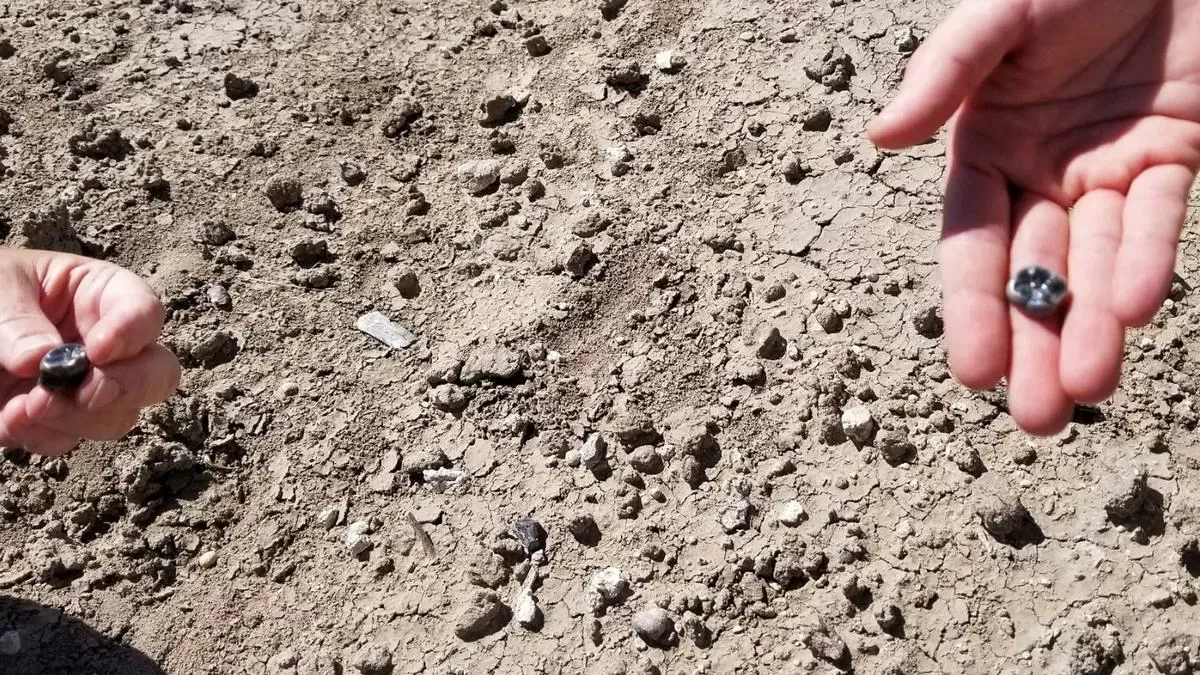
The study of human evolution has always been a fascinating subject, with scientists continually unearthing new information about our past. Recently, a groundbreaking discovery has been made by a team of researchers that could potentially change the way we view our evolutionary tree. The findings suggest that there may be a seventh species in the Australopithecus genus, previously thought to have only six known members. This discovery has been made possible by the analysis of teeth from two individuals, providing an exciting new insight into our ancient ancestors.
The Australopithecus genus is a well-known group of early hominids that lived between 4 and 2 million years ago in Africa. They are considered to be one of the closest ancestors to modern humans and are known for their human-like characteristics, such as their ability to walk upright. Until now, the genus was believed to consist of six known species: Australopithecus afarensis, Australopithecus africanus, Australopithecus anamensis, Australopithecus bahrelghazali, Australopithecus garhi, and Australopithecus sediba.
The new study, published in the journal Nature, focused on the analysis of dental remains from two individuals found in South Africa’s Sterkfontein Caves. These teeth, dated between 2.0 and 2.6 million years old, have been identified as belonging to a previously unknown species in the Australopithecus genus. The researchers named this new species Australopithecus deyiremeda, which means “close relative” in the language spoken by the local Afar people in Ethiopia.
The teeth of these two individuals display a unique combination of features that differentiate them from the other known species in the Australopithecus genus. One of the most striking differences is the size and shape of the molars, which suggest a diet that was different from the others. The researchers believe that this species may have included tougher, harder foods in their diet, such as nuts and seeds, which would explain the larger, thicker molars.
The discovery of this new species has significant implications for our understanding of human evolution. It suggests that there was a greater diversity in the Australopithecus genus than previously thought, with different species coexisting and adapting to different environments and diets. It also raises questions about the relationships between these species and how they evolved over time.
Dr. Yohannes Haile-Selassie, lead author of the study and a paleoanthropologist at the Cleveland Museum of Natural History, stated, “This discovery challenges the traditional view that a single species existed in Africa at that time. We now have evidence that there were at least two, if not more, early human species living at the same time and in close geographic proximity.”
The findings of this study also shed light on the possible ancestor of the human genus Homo. The researchers suggest that Australopithecus deyiremeda may be a potential candidate for the direct ancestor of Homo, based on the similarities between its teeth and those of early Homo species.
The discovery of Australopithecus deyiremeda is an exciting and significant milestone in the field of paleoanthropology. It not only adds to our understanding of human evolution but also highlights the importance of continued research and investigation in this area. As Dr. Haile-Selassie says, “This discovery is just the tip of the iceberg. We need to continue our efforts in searching for more fossils to understand the full diversity and evolutionary relationships of this fascinating period in our past.”
In conclusion, the analysis of teeth from two individuals has led to the discovery of a new species in the Australopithecus genus, challenging our understanding of human evolution. The teeth of Australopithecus deyiremeda provide evidence of a diverse range of species living in close proximity in Africa, and could potentially be the direct ancestor of our genus Homo. This discovery serves as a reminder that there is still much to uncover about our ancient past, and we can only imagine what other secrets lie waiting to be discovered.