
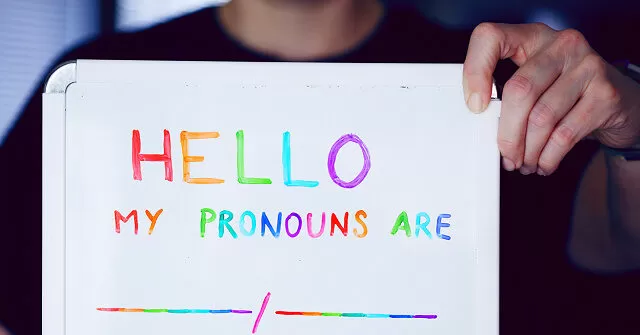
The Department of Justice (DOJ) has recently sparked controversy with its new memo instructing employees to avoid using “preferred pronouns” in their email signatures. This move has been met with mixed reactions, with some praising it as a step towards protecting free speech and others criticizing it as an attack on the LGBTQ+ community.
According to the memo, employees are to use only their first and last names in their email signatures and are not allowed to include any pronouns such as “he/him,” “she/her,” or “they/them.” This decision was made in order to comply with a recent Supreme Court ruling that protects discrimination based on gender identity and sexual orientation.
The DOJ’s decision has been met with strong support from those who argue that using preferred pronouns is a form of compelled speech and goes against the First Amendment. They believe that individuals should have the right to express themselves freely and not be forced to use language that goes against their beliefs.
However, many others have criticized the memo, stating that it is a deliberate attempt to erase the identities of transgender and non-binary individuals. The use of preferred pronouns is seen as a way for these individuals to assert their gender identity and feel respected in the workplace.
The LGBTQ+ community has been vocal in their opposition to this decision, with many pointing out that it goes against the progress made towards inclusivity and acceptance. They argue that using preferred pronouns is a simple way to show respect and support for the transgender and non-binary community, and the DOJ’s decision undermines this.
This memo has also raised concerns about the work culture at the DOJ and how it may affect the well-being of its employees. Many fear that the lack of inclusion and acceptance of diverse identities could lead to a toxic and discriminatory work environment.
In response to the backlash, the DOJ has clarified that the memo was not meant to prohibit the use of preferred pronouns in general, but only in official email signatures. Employees are still free to use their preferred pronouns in their personal email signatures and in communication with colleagues.
This clarification has been met with some relief, as it shows that the DOJ recognizes the importance of respecting individuals’ identities. However, it also raises the question of why the memo was necessary in the first place if it does not prohibit the use of preferred pronouns.
The timing of this memo is also noteworthy, as it comes just weeks after President Trump’s administration announced plans to roll back healthcare protections for transgender individuals. This decision has been met with widespread criticism and has been seen as another attack on the LGBTQ+ community.
In light of these developments, it is crucial for organizations like the DOJ to prioritize inclusivity and respect for diverse identities. The use of preferred pronouns may seem like a small issue, but it has a significant impact on the well-being and acceptance of transgender and non-binary individuals.
In conclusion, the DOJ’s decision to instruct employees not to use preferred pronouns in email signatures has sparked a heated debate. While some see it as a necessary step to protect free speech, others view it as a regressive move that erases the identities of transgender and non-binary individuals. It is essential for organizations to prioritize inclusivity and acceptance to create a safe and inclusive workplace for all employees.