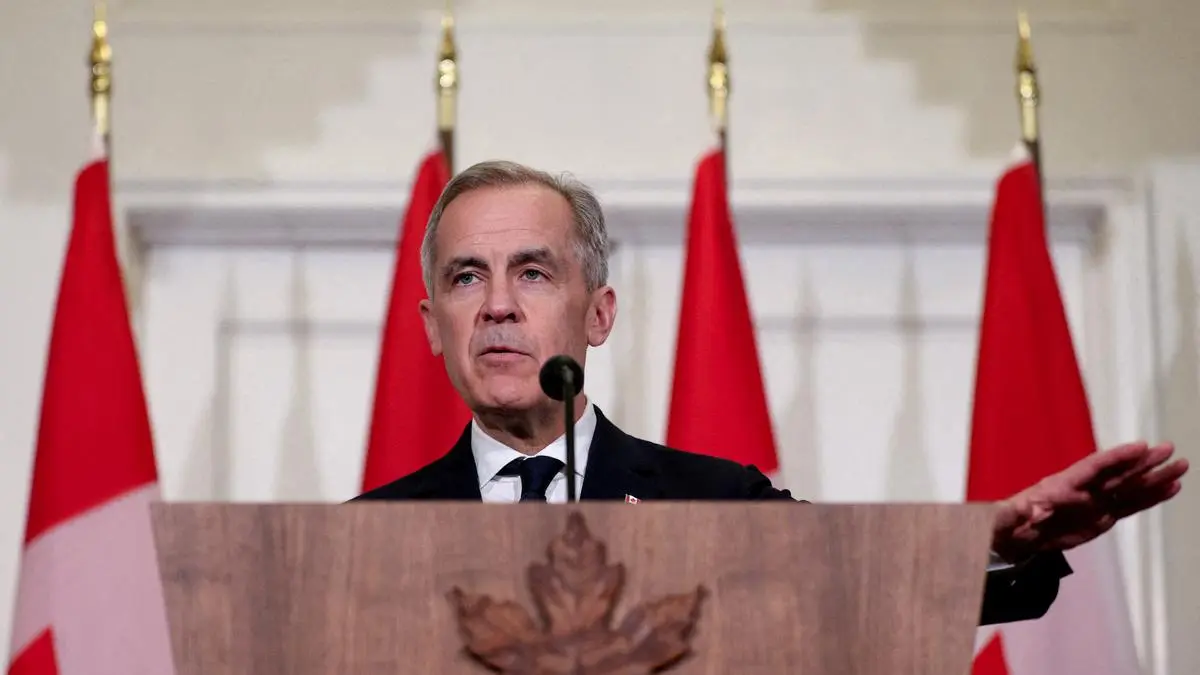
The ongoing trade war between the United States and China has been making headlines for months now. The two economic giants have been locked in a battle of tariffs, with no clear winner in sight. While some may argue that this war is necessary to achieve better trade conditions, others, including Bank of England Governor Mark Carney, are speaking out against it.
In a recent interview with BBC Radio 4’s ‘Today’ program, Carney said, “His trade war is hurting American consumers and workers and it will hurt more.” This statement comes as a warning to the US President, who has been pushing for more tariffs on Chinese imports in an effort to reduce the trade deficit between the two countries.
Carney’s words have struck a chord with many Americans, who are now feeling the impact of these tariffs on their wallets. With prices of goods and products on the rise, consumers are finding it difficult to make ends meet. And it’s not just the average American consumer who is being affected. Carney’s comments also shed light on the impact the trade war is having on American workers.
The imposition of tariffs has led to higher production costs for businesses, which inevitably leads to job cuts. According to a report by the Peterson Institute for International Economics, around 2.6 million American jobs are at risk due to the trade war. This includes workers in industries such as agriculture, manufacturing, and technology, all of which heavily rely on trade with China.
Carney’s statement also highlights the fact that the trade war is not a one-sided battle. While the US may be targeting China with tariffs, the Asian nation has also retaliated with its own set of tariffs on American goods. This has resulted in a decline in US exports to China, which has had a direct impact on American businesses and workers.
Moreover, the trade war has also caused instability in the global market, with other countries feeling the effects of the conflict between the two economic superpowers. This has led to a decrease in investments and business opportunities, ultimately affecting the overall economy.
But it’s not just the present situation that Carney is worried about. He believes that the trade war will only lead to more harm in the future. He warns that the ongoing conflict could potentially lead to a recession, and that it’s time for both countries to come to the negotiating table and find a resolution.
Carney’s words have been met with support from other economists and trade experts, who also believe that the trade war is not the solution to achieving fair trade conditions. In fact, many have suggested that it could have the opposite effect, with China turning to other countries for trade partnerships and leaving the US behind.
As American consumers and workers continue to feel the impact of the trade war, it’s becoming increasingly clear that it is not the answer to the country’s trade issues. Carney’s statement serves as a wake-up call for the US government to reassess its approach and consider alternative solutions.
In conclusion, Carney’s strong words against the trade war are a reminder that the consequences of this battle reach far beyond the US and China. American consumers and workers are already feeling the effects, and the future looks even bleaker. It’s time for the US government to listen to the warnings and take necessary action to protect its citizens and the global economy. As Carney puts it, “His trade war is hurting American consumers and workers and it will hurt more.”