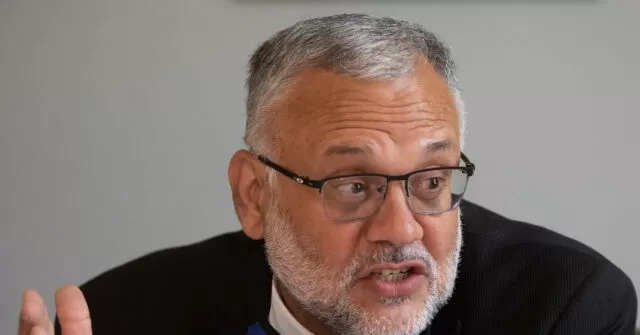
South African Ambassador Embrahim Rasool has been declared persona non grata in the United States after making controversial remarks about President Donald Trump. Secretary of State Marco Rubio announced on Friday that the ambassador is “no longer welcome” in the country for accusing Trump of leading a white supremacist movement.
The incident occurred during a foreign policy seminar where Ambassador Rasool expressed his views on the current political climate in the United States. He stated that President Trump’s rhetoric and policies are fueling a rise in white supremacy and racism in the country. These remarks were met with strong criticism from the Trump administration, with Secretary Rubio calling them “unacceptable and inflammatory.”
In response to the ambassador’s comments, the State Department has revoked his diplomatic visa and declared him persona non grata, effectively banning him from entering the United States. This decision has sparked a heated debate, with some applauding the move while others view it as an attack on free speech.
The ban on Ambassador Rasool has been met with strong opposition from the South African government. In a statement, the Department of International Relations and Cooperation expressed their disappointment and called the decision “regrettable.” They also emphasized the importance of freedom of speech and condemned any attempts to silence differing opinions.
The incident has also caused a stir in the international community, with many questioning the implications of such a ban on diplomatic relations between the two countries. Some experts believe that this move could strain the already fragile relationship between the United States and South Africa.
This is not the first time that Ambassador Rasool has been at the center of controversy. In 2019, he was accused of violating diplomatic protocol by attending a political event in the United States without prior approval from the State Department. However, this recent ban has sparked a larger debate about the limits of free speech and the role of diplomats in expressing their personal opinions.
The ban on Ambassador Rasool has also raised concerns about the state of democracy and freedom of speech in the United States. Many argue that the decision to ban the ambassador is a violation of the principles of democracy and the right to express one’s opinions freely. It has also been viewed as an attempt to silence dissenting voices and stifle critical discussions about the current political climate in the country.
In light of this incident, it is important to reflect on the role of diplomats in promoting international relations and understanding between nations. Diplomats are representatives of their countries and are expected to uphold the values and principles of their governments. However, they also have a responsibility to engage in open and honest dialogue, even if it means expressing views that may be controversial.
The ban on Ambassador Rasool is a reminder of the importance of diplomacy and the need for respectful and constructive dialogue between nations. It is crucial for diplomats to be able to express their opinions without fear of repercussions, as this is essential for promoting understanding and finding solutions to global issues.
In conclusion, the ban on South African Ambassador Embrahim Rasool by the United States is a concerning development that has sparked a debate about the limits of free speech and the role of diplomats. While the decision may have been made in response to controversial remarks, it is important to remember the value of open and honest dialogue in promoting understanding and strengthening international relations. It is our hope that this incident will lead to a deeper reflection on the importance of diplomacy and the need for respectful discourse in the global community.