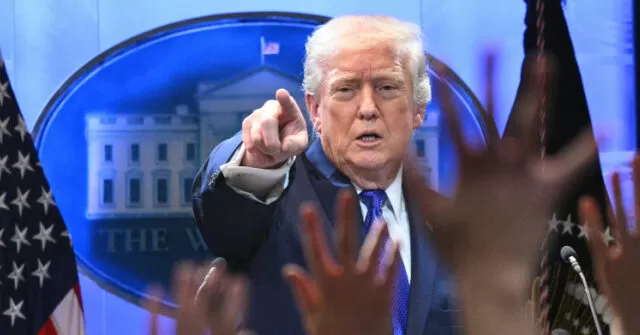
In a recent statement, President Donald Trump expressed his belief that the revenue generated from the International Emergency Economic Powers Act (IEEPA) tariffs will have to be “litigated” over the coming years. This statement comes amid ongoing debates and discussions surrounding the use of tariffs as a tool for economic growth and trade negotiations.
The IEEPA, which was originally enacted in 1977, grants the President the authority to impose tariffs and other economic sanctions in response to a national emergency. Over the years, this act has been used by different administrations to address various issues such as human rights violations, terrorism, and trade disputes. However, the use of this act has been a subject of controversy, with some arguing that it gives too much power to the President and can be easily abused.
President Trump’s administration has been particularly active in utilizing the IEEPA to impose tariffs on various countries, most notably China. The ongoing trade war between the US and China has led to the imposition of tariffs on billions of dollars worth of goods, causing disruptions in global trade and impacting the economies of both countries.
In his statement, President Trump acknowledged that the fate of the revenue generated by these tariffs will have to be “litigated” in the coming years. This suggests that there may be legal challenges to the use of the IEEPA and the tariffs imposed under it. However, the President remains confident in his administration’s actions, stating that “we’re doing very well with tariffs.”
Despite the ongoing debates and legal challenges, the Trump administration has remained steadfast in its use of tariffs as a tool for economic growth and trade negotiations. The President believes that these tariffs will ultimately benefit the American people by protecting domestic industries and creating a more level playing field for trade.
Moreover, the revenue generated from these tariffs has been used to support American farmers and industries affected by retaliatory tariffs from other countries. This has been a key focus for the administration, as they strive to protect American jobs and industries from unfair trade practices.
While the fate of tariff revenue may be “litigated” in the coming years, the Trump administration remains committed to its use of tariffs as a means to achieve fair and balanced trade. The President’s statement serves as a reminder that the use of tariffs is a complex issue that requires careful consideration and may face legal challenges. However, the administration remains confident in its actions and the positive impact they will have on the American economy.
In conclusion, President Trump’s recent statement on the fate of tariff revenue highlights the ongoing debates and discussions surrounding the use of tariffs as a tool for economic growth and trade negotiations. While there may be legal challenges in the future, the administration remains committed to its use of tariffs and believes that they will ultimately benefit the American people. As the fate of tariff revenue continues to be “litigated,” the Trump administration will continue to prioritize the protection of American industries and jobs through fair and balanced trade policies.