
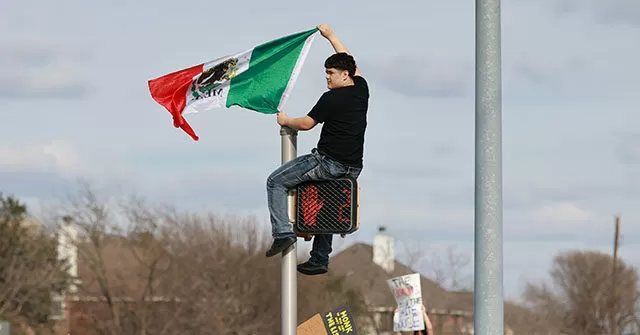
In recent years, there has been a growing trend of students across America participating in protests and walkouts to voice their opinions on various social and political issues. While this form of activism can be seen as a positive way for young people to engage in civic discourse, it has also raised concerns about the safety and well-being of these students.
One particular issue that has sparked a wave of student protests is the controversial policies and actions of Immigration and Customs Enforcement (ICE). As the debate over immigration continues to divide the nation, many students have taken to the streets to express their opposition to ICE and its practices.
However, what started as a peaceful form of protest has now taken a dangerous turn. Reports of students being injured, arrested, and engaging in violence during these anti-ICE protests have been on the rise. This has raised serious concerns about the role of teachers and school administrators in encouraging and organizing these protests.
It is understandable that teachers and school administrators want to support their students and encourage them to be politically engaged. However, it is their responsibility to ensure the safety and well-being of their students, both inside and outside the classroom. By encouraging students to walk out of class and participate in off-campus protests, they are putting these young individuals in harm’s way.
The recent incident at a high school in Portland, Oregon is a prime example of the dangers of school-led protests. During a walkout organized by teachers to protest ICE, a group of students clashed with counter-protesters, resulting in several injuries and arrests. This is just one of many incidents where students have been put in danger due to these protests.
Moreover, these protests have also disrupted the learning environment for students who choose not to participate. By walking out of class, students are missing valuable instructional time and falling behind in their studies. This can have a negative impact on their academic performance and future prospects.
It is also important to consider the impact of these protests on the community as a whole. While students have the right to express their opinions, it should not come at the cost of creating a hostile and unsafe environment for others. The use of violence and aggression during these protests goes against the very principles of peaceful activism and only serves to further divide our society.
As responsible adults, it is our duty to guide and protect our youth. Instead of encouraging them to engage in potentially dangerous protests, we should be teaching them the importance of respectful and peaceful dialogue. It is through open and constructive discussions that real change can be achieved.
Furthermore, it is crucial for teachers and school administrators to remain neutral and unbiased when it comes to political issues. By promoting and organizing these protests, they are imposing their own beliefs on their students and potentially alienating those who may have different opinions. This goes against the principles of education, which should be focused on fostering critical thinking and independent thought.
In conclusion, while it is commendable to see young people taking an interest in social and political issues, it is important to ensure their safety and well-being. School-led protests, especially those involving violence, are not the answer. Instead, we should encourage our students to engage in respectful and peaceful forms of activism, and to prioritize their education above all else. Let us work together to create a safe and inclusive environment for our youth, where their voices can be heard without putting them in danger.