
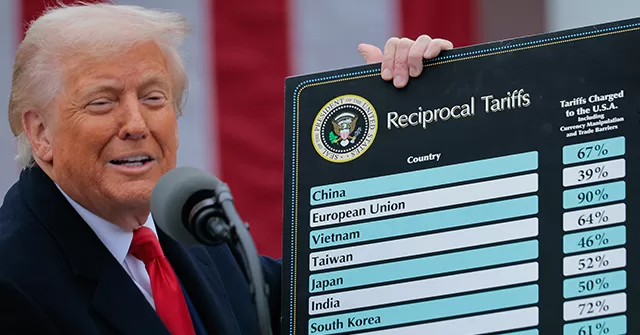
The Trump administration has made waves in global trade with its implementation of tariffs on various goods and products. While this move has sparked controversy and criticism, there is still hope for a successful rebalancing of trade even if the Supreme Court strikes down the president’s tariffs.
The current trade situation has been a hot topic for quite some time now, with the United States facing significant trade deficits and unfair trade practices from several countries. In response, the Trump administration took a strong stance by implementing tariffs on imports from China, Mexico, and other nations. This move was met with mixed reactions, with some praising the president’s efforts to rebalance trade and protect American industries, while others expressed concerns over the potential consequences on the economy.
However, with the looming possibility of the Supreme Court striking down these tariffs, many are questioning the future of the administration’s trade policy. But what many fail to realize is that the Trump administration has a hidden ace up its sleeve – one that could lead to a successful rebalancing of global trade even if the tariffs are struck down.
Firstly, it’s crucial to understand that the Trump administration’s trade policy is not solely reliant on tariffs. In fact, the administration has been actively working towards negotiating better trade deals with various countries, including China, Mexico, and Canada. These negotiations have already resulted in the United States-Mexico-Canada Agreement (USMCA), which aims to replace the North American Free Trade Agreement (NAFTA) and create a more balanced and beneficial trade relationship between the three nations.
This shows that the administration is not solely relying on tariffs to rebalance trade, but rather using them as a tool to push for better trade deals. Even if the Supreme Court were to strike down the tariffs, the administration still has other means to pursue its goal of fair and equitable trade.
Additionally, the Trump administration has been taking steps to reduce the trade deficit by promoting American businesses and industries. The “Buy American, Hire American” policy promotes the use of American-made products and encourages companies to hire American workers. This, in turn, can lead to an increase in domestic production and create more job opportunities for Americans, ultimately reducing the trade deficit.
Moreover, the administration has been working towards diversifying trade partners. While China has been a significant focus, the administration has also been looking to establish strong trade relationships with other countries, such as Japan, South Korea, and Vietnam. This can help reduce the country’s reliance on China for imports and create a more balanced trade portfolio.
Another significant development is the administration’s focus on protecting intellectual property rights and cracking down on trade practices like forced technology transfers and intellectual property theft, which have been a significant concern for American businesses. By addressing these issues, the administration is creating a more level playing field for American companies, which can help reduce the trade deficit and promote fair trade practices.
Furthermore, the current COVID-19 pandemic has highlighted the need for a more self-sufficient and resilient economy. The Trump administration has been pushing for companies to bring back manufacturing to the United States, creating more job opportunities and reducing the country’s reliance on imports. This can help rebalance trade and make the United States less vulnerable to disruptions in the global supply chain.
In conclusion, while the Supreme Court’s decision on the president’s tariffs is eagerly awaited, it’s essential to understand that the Trump administration has other strategies in place to achieve its ultimate goal of rebalancing global trade. From negotiating better trade deals and promoting American industries to diversifying trade partners and protecting intellectual property rights, the administration has a strong and comprehensive approach towards achieving fair and equitable trade. So, even if the tariffs are struck down, the Trump administration still has a path forward in rebalancing global trade, and its efforts will undoubtedly lead to a stronger and more prosperous American economy.