
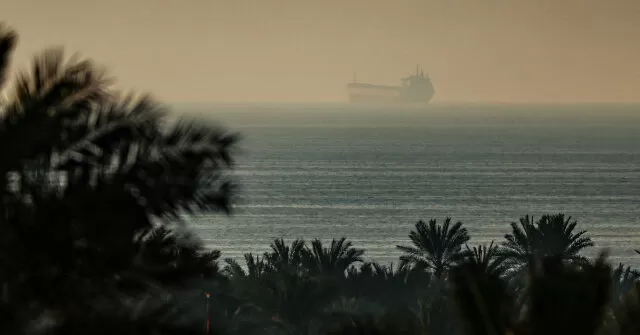
Iran’s Islamic Revolutionary Guard Corps (IRGC) has once again made headlines with its latest announcement on Saturday. The strategically vital Strait of Hormuz, a key waterway for global oil shipments, has been declared closed to all shipping traffic by the IRGC. This move has sparked concerns and raised tensions in the international community.
The Strait of Hormuz, located between Iran and Oman, is a narrow waterway that connects the Persian Gulf to the Gulf of Oman and the Arabian Sea. It is a crucial route for oil tankers, with nearly one-fifth of the world’s oil passing through it. The IRGC’s decision to block this vital waterway has sent shockwaves across the globe, with many questioning the motives behind this move.
The IRGC, a branch of Iran’s armed forces, is known for its extremist ideologies and has been designated as a terrorist organization by the United States. This latest move by the IRGC is seen as a direct threat to global security and stability. It is a clear violation of international maritime laws and has been condemned by many countries, including the United States and its allies.
The United States has been closely monitoring the situation and has expressed its concerns over the IRGC’s actions. In a statement, the US State Department said, “We strongly condemn the IRGC’s attempt to disrupt the free flow of commerce through the Strait of Hormuz. This is a blatant violation of international law and a clear attempt to intimidate the international community.”
The IRGC’s decision to block the Strait of Hormuz has also raised concerns among oil-producing countries in the region. The closure of this vital waterway could have a significant impact on the global oil market, leading to a rise in oil prices and affecting the economies of many countries. This move by the IRGC is not only a threat to global security but also a threat to the global economy.
The IRGC has justified its actions by citing the recent tensions between Iran and the United States. The US has imposed strict economic sanctions on Iran, which have severely impacted the country’s economy. In response, Iran has threatened to disrupt the flow of oil through the Strait of Hormuz. However, the IRGC’s decision to block the waterway is a dangerous and reckless move that will only escalate tensions in the region.
The international community has called on Iran to immediately reverse its decision and allow for the free flow of shipping through the Strait of Hormuz. The United Nations has also expressed its concerns and has urged all parties to exercise restraint and avoid any actions that could further escalate the situation.
The closure of the Strait of Hormuz by the IRGC is a clear indication of the regime’s aggressive and hostile behavior. It is a desperate attempt to gain leverage in the ongoing tensions with the United States. However, this move will only isolate Iran further and damage its already fragile economy.
The United States and its allies have made it clear that they will not tolerate any threats to global security and will take necessary actions to ensure the free flow of shipping through the Strait of Hormuz. The IRGC’s actions have only strengthened the resolve of the international community to stand against Iran’s aggressive behavior.
In conclusion, the closure of the Strait of Hormuz by the IRGC is a dangerous and provocative move that has been condemned by the international community. It is a clear violation of international laws and a threat to global security and stability. The IRGC must immediately reverse its decision and allow for the free flow of shipping through the Strait of Hormuz. The world is watching, and Iran must understand that its actions will have consequences.