
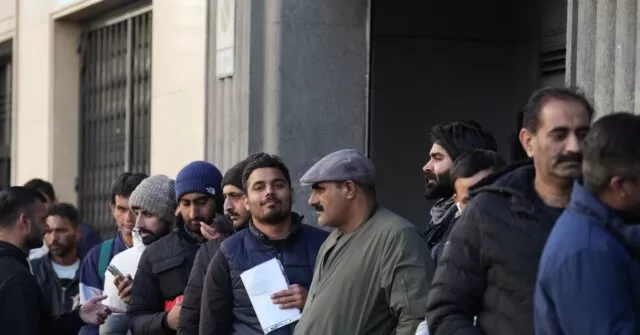
In recent news, it has been reported that over two-thirds of the Spanish public are strongly opposed to the mass amnesty of illegal migrants proposed by Socialist Prime Minister Pedro Sánchez. This comes as a shock to many, as Spain has long been known for its welcoming and inclusive attitude towards immigrants. However, it seems that the majority of Spaniards are not in favor of this controversial plan.
According to a recent poll conducted by the Spanish newspaper El País, nearly seven in ten Spaniards are against the government’s proposal to grant amnesty to thousands of illegal migrants living in the country. This plan, which was announced by Prime Minister Sánchez in an effort to address the ongoing immigration crisis, has sparked a heated debate among the Spanish public.
The proposed amnesty scheme would allow undocumented migrants who have been living in Spain for at least two years to obtain legal residency and work permits. This would also include those who have been denied asylum but have not been deported. The government argues that this plan would help to regularize the status of these migrants and provide them with better opportunities for integration into Spanish society.
However, the majority of Spaniards do not agree with this approach. Many believe that granting amnesty to illegal migrants would only encourage more people to enter the country illegally, leading to an even bigger immigration problem. They also argue that this would be unfair to those who have followed the proper legal channels to enter and reside in Spain.
The opposition to the government’s plan is not limited to a particular political party or region. It is a sentiment shared by people from all walks of life and across the country. Even some members of the ruling Socialist party have expressed their disagreement with the proposed amnesty scheme.
One of the main concerns raised by those opposed to the plan is the potential strain it could put on the already struggling Spanish economy. With high unemployment rates and a struggling job market, many fear that granting work permits to thousands of illegal migrants would only make it harder for Spaniards to find employment. This could also lead to a rise in social tensions and resentment towards immigrants.
Moreover, there are concerns about the security implications of granting amnesty to illegal migrants. With the rise of terrorist attacks in Europe, many fear that this plan could make it easier for potential terrorists to enter and reside in Spain under the guise of being undocumented migrants.
Despite the strong opposition, the government seems determined to move forward with its plan. Prime Minister Sánchez has defended the proposal, stating that it is a necessary step towards addressing the humanitarian crisis at hand. He also argues that this would help to bring undocumented migrants out of the shadows and into the legal system, making it easier for authorities to monitor and regulate their activities.
However, it is clear that the majority of Spaniards are not convinced by these arguments. They believe that there are better ways to address the immigration crisis, such as strengthening border control and providing more support to countries of origin to tackle the root causes of migration.
In conclusion, the proposed mass amnesty of illegal migrants by the Socialist government has been met with strong opposition from the Spanish public. With concerns about the economic, social, and security implications of this plan, it is clear that the majority of Spaniards do not support it. It remains to be seen how the government will respond to this widespread disapproval and whether they will reconsider their approach to addressing the immigration crisis.