
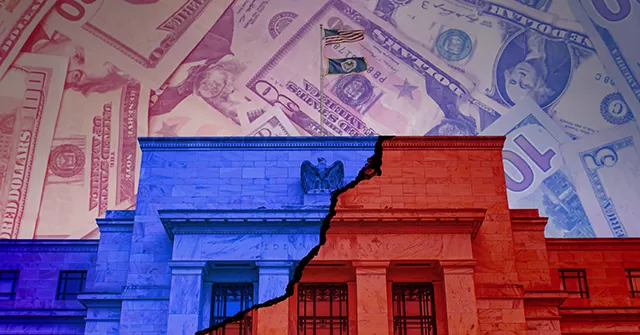
In the world of central banking, the Federal Open Market Committee (FOMC) plays a crucial role in shaping the monetary policy of the United States. This committee, which is responsible for setting interest rates and managing the country’s money supply, is made up of 12 members, including the Federal Reserve Board chairman. However, recent events have raised concerns about the potential impact of political interference on the independence of the Federal Reserve.
Traditionally, the FOMC has always chosen the sitting Board chairman to also serve as its chairman. This practice has been in place for decades and has been seen as a way to ensure continuity and stability within the central bank. However, as we have seen in the past, politics has a way of challenging long-held assumptions.
The recent confirmation process for the new Federal Reserve Board chairman, Jerome Powell, has highlighted the potential for political interference in the central bank’s operations. With a divided Congress and a highly polarized political climate, the confirmation process was anything but smooth. This has raised concerns about the potential for future confirmation fights and the impact they could have on the Federal Reserve’s ability to carry out its mandate.
The potential for a confirmation fight is not just a theoretical concern. In fact, it has already happened in the past. In 2014, President Obama’s nomination of Janet Yellen as the first female Federal Reserve Board chairman was met with resistance from some members of Congress. While she was ultimately confirmed, the process was not without its challenges and delays.
So, what could a confirmation fight mean for the Federal Reserve and the economy as a whole? One potential consequence is the erosion of the central bank’s independence. The Federal Reserve is designed to be an independent entity, free from political influence. This is crucial for its ability to make decisions based on economic data and not political pressure. However, a contentious confirmation process could undermine this independence and lead to decisions that are influenced by political considerations rather than economic fundamentals.
Another potential consequence is the fracturing of the central bank. The Federal Reserve is made up of 12 regional banks, each with its own president and board of directors. While the FOMC is responsible for setting monetary policy, the regional banks also play a role in providing valuable insights and perspectives on the economy. A confirmation fight could create divisions within the central bank, making it difficult for the FOMC to reach a consensus on important decisions.
Moreover, a confirmation fight could also have a negative impact on financial markets. The Federal Reserve’s actions and statements have a significant impact on the stock market and the economy as a whole. Any uncertainty or instability within the central bank could lead to market volatility and have a ripple effect on the economy.
In light of these potential consequences, it is crucial for the confirmation process to be free from political interference. The Federal Reserve’s independence and credibility are essential for maintaining a stable and healthy economy. Any attempts to politicize the central bank could have far-reaching and long-lasting effects.
In conclusion, the recent confirmation process for the new Federal Reserve Board chairman has raised concerns about the potential impact of political interference on the central bank’s independence. While the tradition of choosing the sitting Board chairman as the FOMC chairman has served the central bank well in the past, it is important to recognize the potential risks and challenges that could arise in the future. It is crucial for the confirmation process to remain free from political interference to ensure the Federal Reserve can continue to fulfill its mandate of promoting a stable and prosperous economy.