
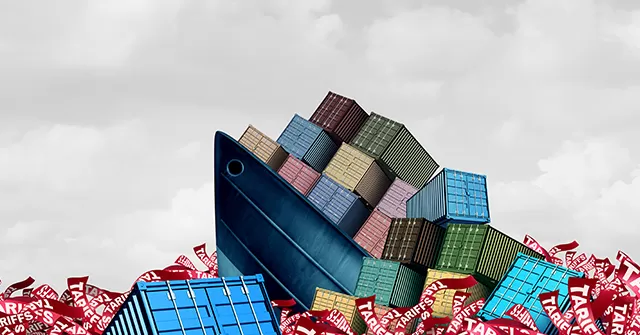
The issue of tariffs has been a hot topic in the world of trade economics, with many debates and discussions surrounding who is truly bearing the burden of these taxes. While some argue that the American people are paying the majority of tariffs, recent studies and data have debunked this myth. In fact, the truth may surprise you.
According to a recent report by the Tax Foundation, Americans are not paying 96% of tariffs as previously believed. In fact, the report found that only 24% of tariffs are being paid by American consumers, while the remaining 76% are being absorbed by foreign producers and importers. This revelation has caused a stir in the trade community and has shed light on the true impact of tariffs on the American economy.
One of the main reasons for this misconception is the way tariffs are calculated and implemented. Tariffs are essentially taxes on imported goods, and they are typically paid by the importer of the goods. However, the cost of these tariffs is often passed on to the consumer in the form of higher prices. This is where the misconception arises, as it is assumed that the American people are directly paying for these tariffs. However, as the Tax Foundation report has shown, this is not the case.
So who is truly paying for the tariffs? The answer lies in the complex web of global trade. When tariffs are imposed on imported goods, foreign producers and exporters are forced to either absorb the cost or pass it on to their customers. In most cases, they choose to increase the prices of their goods, making them less competitive in the American market. This results in a decrease in demand for these goods, causing foreign producers to bear the burden of the tariffs.
Moreover, the Tax Foundation report also found that tariffs have a negative impact on the American economy as a whole. While they may provide some protection for domestic industries, they also lead to higher prices for consumers and a decrease in overall economic activity. This is because tariffs not only affect the targeted goods, but they also have a ripple effect on other industries and products. For example, if tariffs are imposed on steel imports, the cost of steel will increase, leading to higher prices for products that use steel as a raw material.
Furthermore, tariffs can also lead to retaliatory measures from other countries, resulting in a trade war that can have detrimental effects on the global economy. This has been evident in the recent trade tensions between the United States and China, where both countries have imposed tariffs on each other’s goods, causing disruptions in trade and economic uncertainty.
It is important to note that while tariffs may provide some short-term benefits for certain industries, they ultimately have a negative impact on the economy as a whole. The Tax Foundation report has shed light on the true cost of tariffs and has debunked the myth that Americans are paying the majority of these taxes. It is time for policymakers to reevaluate the use of tariffs and consider alternative measures to protect domestic industries without harming the economy.
In conclusion, the idea that Americans are paying 96% of tariffs is a myth that has been debunked by recent studies and data. The truth is that foreign producers and importers are bearing the majority of the burden of these taxes. Tariffs not only have a negative impact on the American economy, but they also have the potential to spark trade wars and disrupt global trade. It is time for a more comprehensive and strategic approach to trade policies that will benefit all parties involved. Let us hope that policymakers take note of these findings and work towards creating a more fair and efficient trade system for the benefit of all.