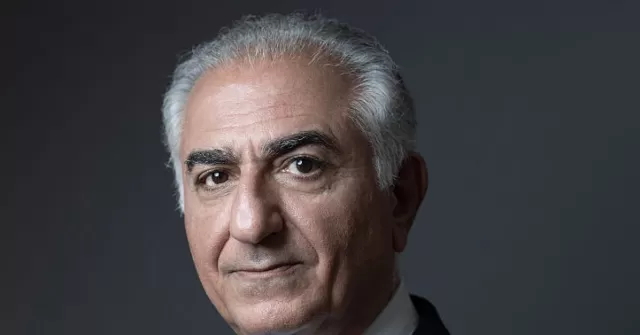
President Donald Trump recently spoke to Reuters about the current political situation in Iran and the possibility of a new leader emerging should the Islamist dictatorship fall. In his interview, Trump expressed his thoughts on the potential leadership of Reza Pahlavi, the son of the former Shah of Iran.
While Trump acknowledged that Pahlavi “seems very nice,” he also expressed uncertainty about whether the Iranian people would support him as their leader. This statement by the U.S. president has sparked a lot of interest and speculation about the future of Iran and its leadership.
The current situation in Iran is tense, with widespread protests against the authoritarian regime and its policies. The people of Iran have been suffering under the oppressive rule of the Islamist dictatorship for decades, and they have been yearning for a change in leadership. In the midst of this turmoil, the possibility of a new leader emerging has become a topic of discussion.
Reza Pahlavi, the son of the former Shah of Iran, has been gaining attention as a potential leader for the country. Pahlavi has been living in exile since the Iranian Revolution in 1979, but he has remained vocal about his desire to see democracy and freedom in his homeland. With his royal background and strong ties to the country, Pahlavi has been seen by many as a viable option for a new leader.
President Trump’s comments about Pahlavi have been met with mixed reactions. Some see it as a positive endorsement of Pahlavi’s potential leadership, while others view it as a lack of confidence in the Iranian people’s ability to choose their own leader. However, one thing is clear – Trump’s words have put the spotlight on Pahlavi and his potential role in the future of Iran.
Pahlavi himself has responded to Trump’s comments, stating that he is grateful for the recognition but also emphasizing that the decision of who should lead Iran ultimately lies with the Iranian people. He has also reiterated his commitment to bringing democracy and freedom to his country, stating that he is willing to work with all factions and groups to achieve this goal.
The possibility of Pahlavi becoming the leader of Iran has sparked hope and excitement among many Iranians. Pahlavi has been seen as a symbol of the country’s past glory and a potential beacon of hope for its future. His vision of a democratic and free Iran has resonated with many, and his return to the country could potentially unite and mobilize the people towards a common goal.
However, there are also concerns and criticisms surrounding Pahlavi’s potential leadership. Some argue that his royal background and years of living in exile may disconnect him from the realities of the Iranian people’s struggles. Others question his ability to navigate the complex political landscape of Iran and bring about real change.
Despite these concerns, Pahlavi remains a popular figure among many Iranians, and his potential leadership has sparked a sense of optimism and possibility in the country. The fact that President Trump has acknowledged Pahlavi as a potential leader has only added to this sentiment.
In conclusion, President Trump’s comments about Reza Pahlavi have shed light on the potential for a new leader to emerge in Iran. While there are varying opinions about Pahlavi’s suitability for the role, one thing is certain – the Iranian people are yearning for change and a new direction for their country. Whether Pahlavi will be the one to lead them towards this remains to be seen, but his presence in the political discourse has certainly sparked a sense of hope and possibility for a better future for Iran.