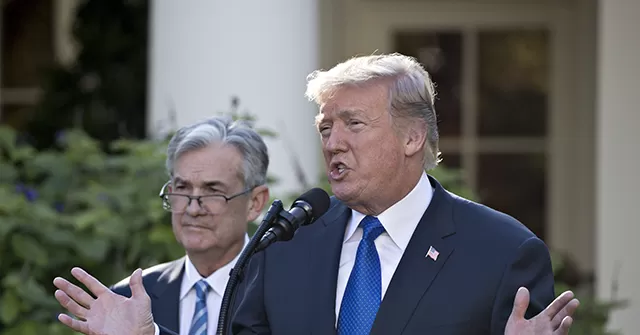
In a surprising move, Federal Reserve Chairman Jerome Powell has publicly criticized the Trump administration’s handling of the economy. This bold move has sparked speculation that President Trump may use this opportunity to appoint a new leader of the Federal Reserve without Senate approval. This development has caused a stir in the business world, with many wondering who will be the next Fed chairman and what impact it will have on the economy.
Powell’s criticism of the Trump administration came during a speech at the annual Jackson Hole economic symposium. He expressed concerns about the ongoing trade war with China and the potential negative effects it could have on the economy. He also emphasized the importance of the Fed’s independence and its role in maintaining a stable economy.
This public attack on the Trump administration has raised questions about Powell’s future as the Fed chairman. President Trump has been vocal about his dissatisfaction with Powell’s decisions, particularly his interest rate hikes. With Powell’s term as chairman set to end in 2022, there is speculation that Trump may use this opportunity to appoint a new leader who aligns more with his economic policies.
But the question remains, who will be the next Fed chairman? Traditionally, the president nominates a candidate for the position, and the Senate confirms the appointment. However, there is a loophole in the Federal Reserve Act that allows the president to appoint a temporary chairman without Senate approval. This loophole has only been used once before, during the Great Depression, and it remains to be seen if President Trump will take advantage of it.
If Trump does choose to appoint a new Fed chairman without Senate approval, it could have significant implications for the economy. The Fed plays a crucial role in setting monetary policy and regulating the banking system. A new chairman with different economic views could lead to a shift in policies that could impact businesses and consumers.
Some potential candidates for the position include Kevin Warsh, a former Fed governor who has been critical of the central bank’s policies, and John Taylor, a Stanford economist who has been a vocal advocate for a more rules-based approach to monetary policy. Both candidates have been considered for the position in the past, and their names have resurfaced in light of Powell’s criticism.
The uncertainty surrounding the next Fed chairman has caused some concern in the business world. The stock market has been volatile in recent months, and any change in the Fed’s leadership could add to the uncertainty. However, some experts believe that a new chairman could bring a fresh perspective and potentially improve the economy.
In the midst of all this speculation, it is essential to remember that the Federal Reserve’s independence is crucial for maintaining a stable economy. The central bank must make decisions based on economic data and not be influenced by political agendas. Powell’s criticism of the Trump administration is a reminder of the Fed’s role in safeguarding the economy from political interference.
In conclusion, Jerome Powell’s decision to publicly criticize the Trump administration has opened up the possibility of a new Fed chairman being appointed without Senate approval. This development has caused speculation about who will fill the position and what impact it will have on the economy. While the uncertainty may cause some concern, it is crucial to remember the importance of the Fed’s independence in maintaining a stable economy. Only time will tell who will be the next Fed chairman and how their leadership will shape the future of the economy.