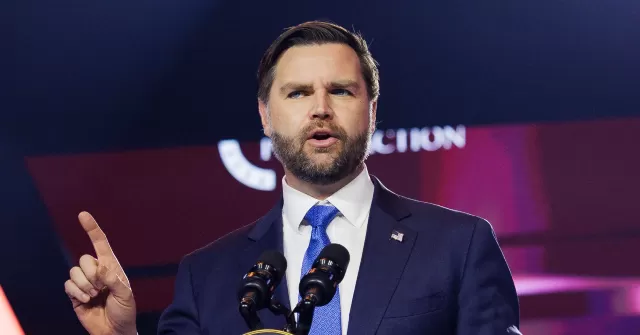
Mass migration has become a hot topic in recent years, with many countries facing an influx of immigrants from different parts of the world. While some see it as a positive development, others, like Vice President JD Vance, believe that it is threatening the very foundations of American and European societies.
In an interview with a UK-based media outlet, Vance expressed his concerns about the impact of mass migration on civic conflict and national stability. He argued that the large-scale movement of people from one country to another is causing a clash of cultures and values, leading to social and political tensions.
Vance’s views are not unfounded. The United States and Europe have seen a significant increase in immigration in the past few decades, with millions of people seeking better economic opportunities and refuge from war-torn countries. While this has undoubtedly brought diversity and enriched these societies, it has also created challenges that cannot be ignored.
One of the main concerns raised by Vance is the potential for civic conflict. When people from different backgrounds and beliefs come together, there is bound to be some level of friction. This is not to say that all immigrants are a threat to the social fabric of a country, but the sheer number of people entering a new society can create a sense of unease and insecurity among the native population.
Moreover, mass migration can also lead to a strain on resources and services. With a sudden increase in population, there is a higher demand for housing, healthcare, education, and other essential services. This can put a strain on the government’s budget and lead to a decrease in the quality of life for both immigrants and natives.
But perhaps the most significant concern raised by Vance is the threat to national stability. As more and more people from different cultures and backgrounds enter a country, it becomes challenging to maintain a sense of national identity and unity. This can lead to a divided society, with different groups competing for power and influence.
Vance’s comments have sparked a debate on the issue of mass migration and its consequences. Some argue that it is a natural part of globalization and that countries should embrace diversity and multiculturalism. While this is a valid point, it is essential to consider the potential consequences of uncontrolled mass migration.
It is also worth noting that mass migration is not a new phenomenon. Throughout history, people have moved from one place to another in search of a better life. However, what sets the current situation apart is the scale and speed at which it is happening. This has made it challenging for governments to manage and has led to a sense of uncertainty and fear among the population.
So, what can be done to address this issue? First and foremost, it is crucial for governments to have a well-defined immigration policy that takes into account the needs and concerns of both immigrants and natives. This policy should also include measures to integrate immigrants into society and promote social cohesion.
Secondly, there needs to be a global effort to address the root causes of mass migration, such as poverty, war, and political instability. This requires cooperation and support from developed countries to help developing nations improve their economic and social conditions.
Lastly, it is essential to have an open and honest dialogue about the issue of mass migration. Instead of demonizing or glorifying it, we need to have a rational discussion about its impact and find ways to address the challenges it poses.
In conclusion, Vice President JD Vance’s comments on mass migration may have sparked controversy, but they have also brought attention to a pressing issue that needs to be addressed. While immigration can bring many benefits, it also has the potential to cause civic conflict and threaten national stability. It is up to governments and society as a whole to find a balance and ensure that the foundations of our societies remain strong and stable.