
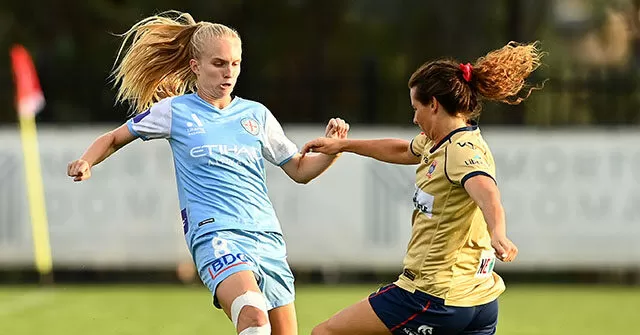
The National Women’s Soccer League (NWSL) has been making headlines recently, but not for the reasons one would hope. Angel City FC star Elizabeth Eddy has caused quite a stir within the league after calling for the adoption of gender standards to protect women’s sports. While her intentions may have been noble, her statement has divided the NWSL and caused backlash from her own team.
Eddy, who plays as a forward for Angel City FC, took to social media to voice her concerns about the current state of women’s sports. In her post, she called on the NWSL to “adopt gender standards” in order to ensure fair competition and protect the integrity of women’s sports. She also expressed her frustration with the lack of action from the league in addressing this issue.
Her post sparked a heated debate within the NWSL, with some players and teams supporting her stance while others criticized her for causing division within the league. Eddy’s own team, Angel City FC, released a statement distancing themselves from her comments and emphasizing their commitment to inclusivity and diversity.
This incident has shed light on a larger issue that has been plaguing women’s sports for years – the lack of gender standards. While men’s sports have strict regulations in place to ensure fair competition, women’s sports have been left to fend for themselves. This has resulted in a growing concern among female athletes about the increasing number of transgender women competing in women’s sports.
The argument against transgender women competing in women’s sports is not about discrimination or exclusion, but rather about maintaining a level playing field. Biological differences between men and women give men a physical advantage in sports, and this cannot be ignored. Without gender standards in place, women’s sports are at risk of losing their integrity and becoming dominated by biological males.
The NWSL, as the premier women’s soccer league in the United States, has a responsibility to address this issue and protect the interests of its players. It is time for the league to take a stand and implement gender standards that will ensure fair competition and protect the integrity of women’s sports.
Some may argue that implementing gender standards would be discriminatory towards transgender women, but this is not the case. The NWSL can follow the example of other sports leagues, such as the International Olympic Committee, which has set guidelines for transgender athletes to compete in the Olympics. These guidelines take into consideration the physical advantages that biological males have over females and aim to create a fair and inclusive environment for all athletes.
It is also important to note that gender standards would not only benefit female athletes, but also transgender women. By creating a separate category for transgender women to compete in, they would have the opportunity to showcase their skills and talents without being at a disadvantage.
The NWSL has the opportunity to be a leader in promoting gender equality in sports. By adopting gender standards, the league would be sending a powerful message that it is committed to protecting the integrity of women’s sports and ensuring fair competition for all its players.
In the wake of Eddy’s post, the NWSL has announced that they will be reviewing their policies and procedures regarding transgender athletes. This is a step in the right direction, but more needs to be done. The league must take swift action and implement gender standards to protect the future of women’s sports.
In conclusion, Elizabeth Eddy’s call for the adoption of gender standards in the NWSL has sparked an important conversation about the state of women’s sports. While her statement may have caused division within the league, it has also brought attention to a pressing issue that needs to be addressed. It is time for the NWSL to take a stand and implement gender standards to protect the integrity of women’s sports and ensure fair competition for all its players. Let us hope that the league will make the right decision and pave the way for a more inclusive and equal future for women’s sports.