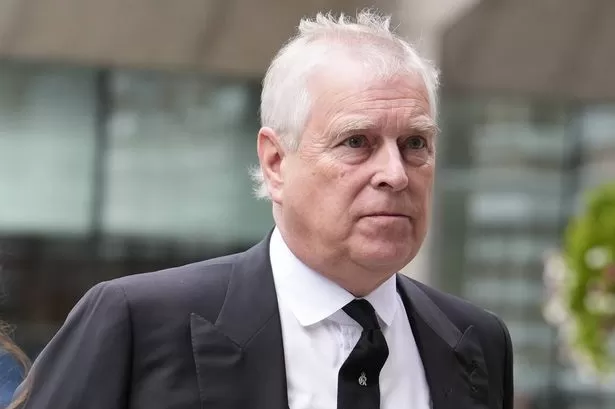
The recent news of Prince Andrew’s potential voluntary departure from his royal residence has sparked concern from Parliament’s spending watchdog. According to reports, the Duke of York is in talks with representatives of his brother, Prince Charles, about leaving his official residence at Buckingham Palace.
This development has raised eyebrows and questions from the public, as well as from the National Audit Office (NAO), which is responsible for scrutinizing the use of public funds. The NAO has expressed concern over the potential costs associated with Prince Andrew’s departure and the impact it could have on taxpayers.
In light of this, it is important to understand the context of Prince Andrew’s potential departure and the role of the NAO in this matter. The Duke of York has been facing intense scrutiny and backlash in recent years due to his association with convicted sex offender Jeffrey Epstein. This has led to him stepping back from his royal duties and facing calls for his removal from the royal family.
In the midst of this controversy, Prince Andrew’s use of public funds has come under scrutiny. The NAO has a duty to ensure that public money is spent efficiently and effectively, and they have a right to raise concerns about any potential costs associated with the Duke of York’s departure from Buckingham Palace.
However, it is important to note that the NAO’s concerns are not a reflection of Prince Andrew’s character or the decisions made by the royal family. In fact, the NAO has acknowledged that the royal family has been cooperative and transparent in their discussions about the Duke of York’s departure.
Furthermore, Prince Andrew’s potential departure from Buckingham Palace is not a new development. It has been reported that talks between the Duke of York and Prince Charles’s representatives have been ongoing for some time now. This shows that the royal family is taking a proactive approach in addressing any potential costs and ensuring that public money is used responsibly.
Moreover, it is worth noting that the royal family is not immune to financial scrutiny. They have been subject to numerous audits and reviews by the NAO in the past, and have always been found to be compliant with financial regulations. This shows that the royal family takes their responsibility to the public very seriously and is committed to being accountable for their use of public funds.
In light of these facts, it is important to view the NAO’s concerns as a positive step towards ensuring transparency and accountability in the use of public funds. It is also reassuring to see that the royal family is actively working to address any potential costs and find a solution that is in the best interest of the public.
In conclusion, while the NAO’s concerns may have raised some initial alarm, it is important to view them in the right context. The Duke of York’s potential departure from Buckingham Palace is a sensitive and complex issue, but it is being handled with transparency and responsibility by the royal family. Let us trust that the discussions between Prince Andrew and Prince Charles’s representatives will lead to a solution that is in the best interest of everyone involved, including the public.