
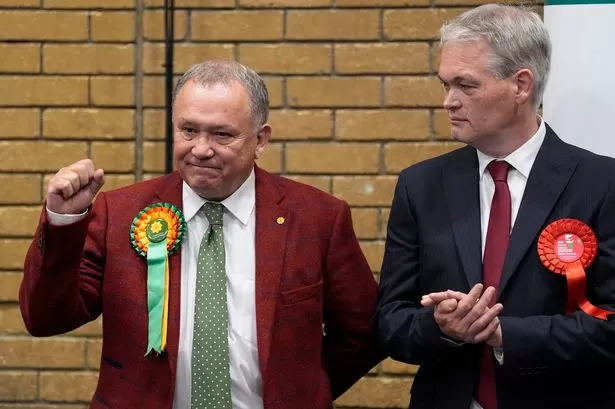
Labour, one of the major political parties in the UK, has recently faced a major setback in the Caerphilly by-election. The party saw its vote plummet, losing to Plaid Cymru candidate Lindsay Whittle. This unexpected turn of events has left many questioning the future of Labour in the region.
The Caerphilly by-election, held on 6th June 2019, was called after the resignation of Labour’s former MP, Wayne David. The constituency, located in South Wales, has been a Labour stronghold for decades. However, this time, the party faced a tough competition from Plaid Cymru, a Welsh nationalist party.
The results of the by-election came as a shock to many, with Plaid Cymru’s Lindsay Whittle securing a comfortable victory with a majority of 3,500 votes. Labour, on the other hand, saw a significant drop in their vote share, losing over 12% compared to the 2017 general election. This defeat has raised concerns about the party’s popularity and support among the people of Caerphilly.
So, what led to this unexpected outcome? There are a few factors that may have contributed to Labour’s defeat in the by-election. Firstly, the party has been facing internal conflicts and divisions, which have been evident in recent months. This has created a sense of uncertainty and lack of confidence among the voters. Additionally, the party’s stance on Brexit has been unclear, which may have alienated some of their supporters.
Moreover, Plaid Cymru’s campaign was focused on local issues and the party’s promise to bring change and progress to the region. This resonated with the people of Caerphilly, who have been facing challenges such as unemployment and lack of investment in the area. On the other hand, Labour’s campaign seemed to lack a clear message and failed to address the concerns of the local community.
This by-election result is a wake-up call for Labour, not only in Caerphilly but also in other parts of the country. It is a reminder that the party needs to reconnect with its supporters and address their concerns effectively. The defeat in Caerphilly should serve as a lesson for the party to unite and present a strong and coherent message to the voters.
However, it is not all doom and gloom for Labour. The party still holds a significant number of seats in the region and has a strong support base. This defeat should be seen as an opportunity for the party to reflect on its policies and strategies and make necessary changes to win back the trust of the people.
On the other hand, Plaid Cymru’s victory in Caerphilly is a significant milestone for the party. It is the first time in the history of the constituency that a Plaid Cymru candidate has been elected as an MP. This win not only strengthens the party’s position in Wales but also sends a message to the rest of the UK that Plaid Cymru is a force to be reckoned with.
In his victory speech, Lindsay Whittle emphasized the need for change and promised to work towards the betterment of the people of Caerphilly. He also thanked the voters for putting their faith in him and his party. This win is a testament to the hard work and dedication of Plaid Cymru’s campaign team and their commitment to bringing positive change to the region.
In conclusion, the Caerphilly by-election has been a significant event in the political landscape of the UK. Labour’s defeat and Plaid Cymru’s victory have sent a strong message to all political parties. It is a reminder that the people’s trust and support cannot be taken for granted and that parties must work hard to earn it. As for Labour, this defeat should serve as a wake-up call and an opportunity to regroup and come back stronger. And for Plaid Cymru, this win is a stepping stone towards their goal of creating a better and more prosperous Wales.