
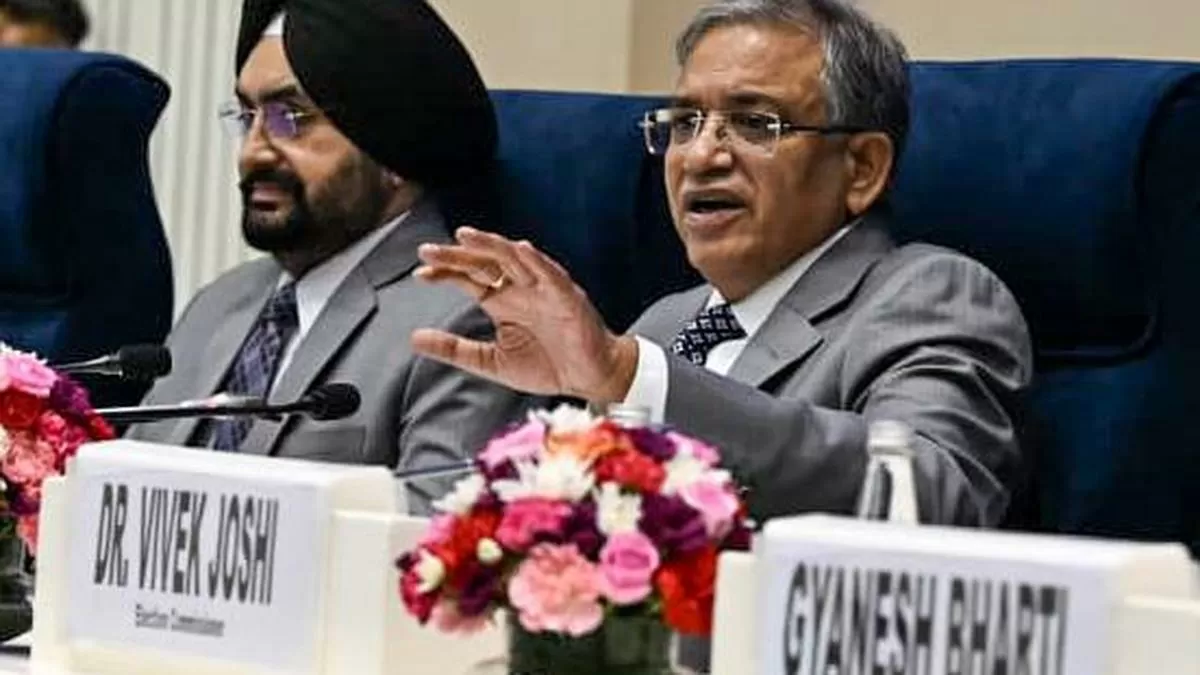
The Election Commission (EC) of India is gearing up for the upcoming assembly elections in several states next year. As the country prepares for this important democratic process, one strong opinion within the top EC brass is to hold the State of the Nation Report (SIR) in phases. This decision has been met with mixed reactions, but it is believed that this approach will ensure a smooth and efficient election process.
The idea behind holding SIR in phases is to ease the burden on the EC and ensure that the elections are conducted in a fair and transparent manner. By breaking down the process into phases, the EC can focus on one state at a time, ensuring that all necessary preparations are in place before moving on to the next state. This will not only help in better management of resources but also ensure that the election process is not compromised in any way.
The states going for assembly elections next year include Uttar Pradesh, Punjab, Uttarakhand, Manipur, and Goa. These states have a significant number of seats in the Lok Sabha and play a crucial role in shaping the political landscape of the country. It is, therefore, imperative that the elections in these states are conducted smoothly and without any glitches. By holding SIR in phases, the EC can give each state the attention it deserves, ensuring that the entire process is conducted in a fair and impartial manner.
Moreover, by including more states in the first phase of SIR, the EC is sending a strong message that every state is important and their voices will be heard. This move will also give a fair chance to all political parties to campaign and reach out to the voters in these states. It will also give the EC enough time to address any issues that may arise during the election process, ensuring that the elections are conducted in a free and fair manner.
One of the main concerns raised by some critics is that holding SIR in phases may delay the election process and cause confusion among the voters. However, the EC has assured that all necessary measures will be taken to ensure that the entire process is completed within the stipulated time frame. The phased approach will also give the EC enough time to address any issues that may arise, without compromising on the quality and fairness of the election process.
Another benefit of holding SIR in phases is that it will allow the EC to focus on each state individually and address the specific issues and challenges faced by that state. This will ensure that the election process is tailored to the needs of each state, making it more efficient and effective. It will also give the EC a chance to learn from each phase and implement any necessary changes in the subsequent phases, making the overall process more streamlined and error-free.
Moreover, holding SIR in phases will also give the voters a chance to make an informed decision. With the focus on one state at a time, the election campaign will be more targeted and the voters will have a better understanding of the issues and promises made by the political parties. This will also help in reducing the noise and chaos that often surrounds elections, making it a more peaceful and meaningful process.
In conclusion, the decision to hold SIR in phases is a step in the right direction by the EC. It shows their commitment to conducting free and fair elections and their willingness to adapt and improve the election process. By including more states in the first phase, the EC is giving a fair chance to every state and ensuring that their voices are heard. This move will also help in better management of resources and ensure a smooth and efficient election process. Let us all support the EC in this decision and work towards a stronger and more vibrant democracy.