
The recent leak of a Young Republican group chat has caused quite a stir in the political world. The messages, which were obtained by Politico, have garnered the attention of the White House and sparked a heated debate among politicians.
According to reports, officials from the White House have confronted a State Department staffer who is accused of leaking the messages to the media. The leak has caused concern among Republicans, who fear that their private conversations may be used against them in the upcoming elections.
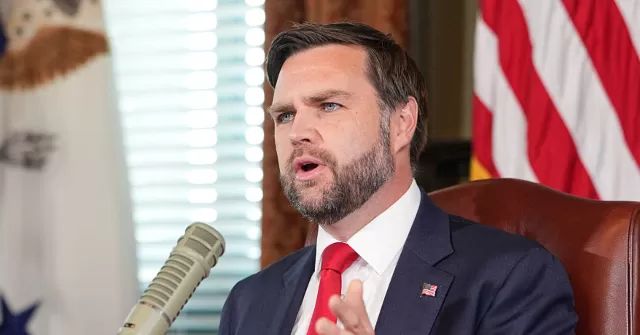
However, the most shocking aspect of this leak is not the content of the messages, but the response it has received from Vice President JD Vance. In a recent statement, Vance argued that the threatening texts sent by Democrat Virginia attorney general candidate Jay Jones were “1,000 times worse” than the controversial group chat.
This statement has caused an uproar among Democrats, who have accused Vance of downplaying the severity of the group chat. But the question remains, is Vance right? Are the messages sent by Jones truly worse than the ones sent by the Young Republicans?
Before we delve into that, let’s take a closer look at the group chat in question. The messages, which were sent by members of the Young Republicans, contained derogatory and offensive remarks about various minority groups. The language used in the chat was unacceptable and has rightfully received backlash from both sides of the political spectrum.
However, it is important to note that these messages were sent in a private group chat and were not intended for public consumption. While this does not excuse the content of the messages, it does raise questions about the ethics of leaking private conversations.
On the other hand, the threatening texts sent by Jones were made public by the candidate himself. In a tweet, Jones stated that he would “call for a political assassination” if he were to lose the election. This statement is not only alarming but also goes against the very principles of democracy and peaceful transfer of power.
It is understandable that Vance, as a Republican, would be quick to condemn the group chat and defend his party. However, his comparison of the two incidents is not only misguided but also dangerous. Threatening violence, in any form, is never acceptable and should be condemned by all political leaders.
Furthermore, Vance’s statement undermines the severity of the group chat and the impact it has on marginalized communities. The language used in the chat perpetuates harmful stereotypes and contributes to the already existing divide in our society. It is important for politicians to acknowledge the harm caused by such actions and work towards promoting unity and inclusivity.
In light of these events, it is crucial for all political leaders to take responsibility for their words and actions. The leak of the group chat serves as a reminder that private conversations can have public consequences. It is imperative for politicians to uphold the values of respect, tolerance, and equality in all aspects of their lives.
In conclusion, the leak of the Young Republican group chat has sparked an important conversation about the role of private conversations in the political arena. While the messages were unacceptable, it is important to address the root cause of such behavior and work towards creating a more inclusive and respectful political environment. Threatening violence, on the other hand, should never be tolerated and must be condemned by all. Let us hope that this incident serves as a wake-up call for politicians to prioritize unity and respect in their words and actions.