
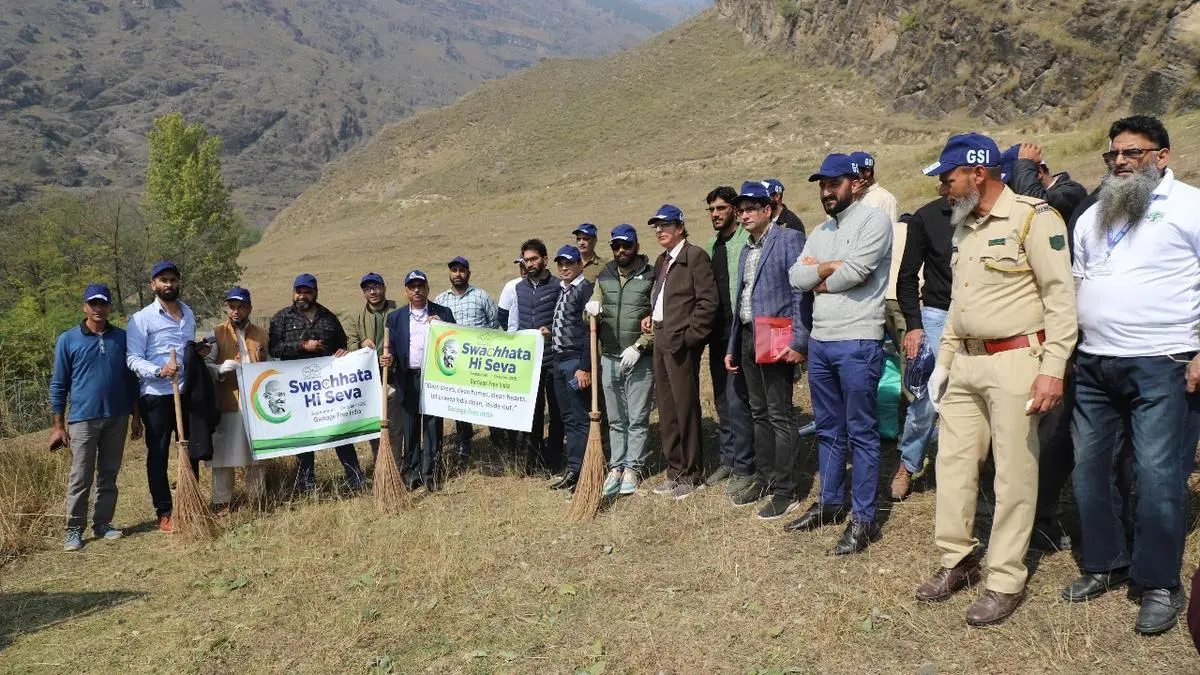
The Guryul Ravine in Kashmir, a picturesque valley nestled in the Himalayan mountains, is a place of great significance. It is not only a popular tourist destination, but also a site of immense geological and historical importance. The ravine is home to a treasure trove of fossil records that provide evidence of a cataclysmic event that occurred millions of years ago. These fossils have not only helped scientists understand the Earth’s past, but also shed light on the evolution of life on our planet.
The Guryul Ravine is located in the Poonch district of Jammu and Kashmir, India. It is a deep, narrow valley that stretches for over 20 kilometers and is surrounded by towering cliffs and lush green forests. The ravine is a popular spot for adventure seekers, with its challenging terrain and breathtaking views. But what makes this place truly unique is the presence of fossil records that date back to the Permian-Triassic period, also known as the “Great Dying”.
The Permian-Triassic period, which occurred approximately 252 million years ago, was a time of great upheaval on Earth. It is considered to be the most catastrophic event in the planet’s history, with over 90% of all species becoming extinct. The cause of this mass extinction is still debated, but one theory suggests that it was triggered by a series of volcanic eruptions that released massive amounts of carbon dioxide into the atmosphere, leading to a rise in global temperatures and acidification of the oceans.
The Guryul Ravine, with its unique geological features, provides a glimpse into this catastrophic event. The fossils found here are primarily of marine organisms, such as ammonites, bivalves, and brachiopods, which were abundant during the Permian-Triassic period. These fossils have been preserved in the sedimentary rocks of the ravine, giving us a rare opportunity to study the marine life that existed millions of years ago.
But it’s not just the fossils that make the Guryul Ravine a significant site. The geological formations found here are also of great interest to scientists. The ravine is made up of sedimentary rocks, which were formed by the accumulation of layers of sediment over millions of years. These rocks provide a record of the Earth’s past climate and environment, and the changes that occurred during the Permian-Triassic period.
The Guryul Ravine has been a subject of study for many years, with scientists from all over the world flocking to this remote location to unravel its mysteries. The fossil records found here have helped in the identification and classification of new species, providing valuable insights into the evolution of life on Earth. They have also helped in understanding the impact of the Permian-Triassic extinction event on marine life and the subsequent recovery of species.
Apart from its scientific significance, the Guryul Ravine is also a place of great cultural importance. The local community, who have been living in this region for generations, have their own stories and legends associated with the ravine. They believe that the fossils found here are the remains of ancient gods and demons, and the ravine itself is a sacred place. This adds to the mystique and charm of the Guryul Ravine, making it a must-visit destination for tourists and researchers alike.
The Guryul Ravine is a testament to the Earth’s resilience and its ability to bounce back from catastrophic events. It is a reminder that no matter how devastating the impact, life finds a way to survive and thrive. The fossils found here are a reminder of the fragility of our planet and the need to protect and preserve it for future generations.
In conclusion, the Guryul Ravine in Kashmir is not just a beautiful valley, but also a site of immense scientific and cultural significance. The fossil records found here provide evidence of a cataclysmic event that shaped the Earth’s history and continue to fascinate and intrigue scientists and visitors alike. It is a place that deserves to be explored and appreciated, not just for its natural beauty, but also for the valuable insights it provides into our planet’s past. So, if you ever find yourself in Kashmir, make sure to visit the Guryul Ravine and witness the wonders of our planet’s history.