
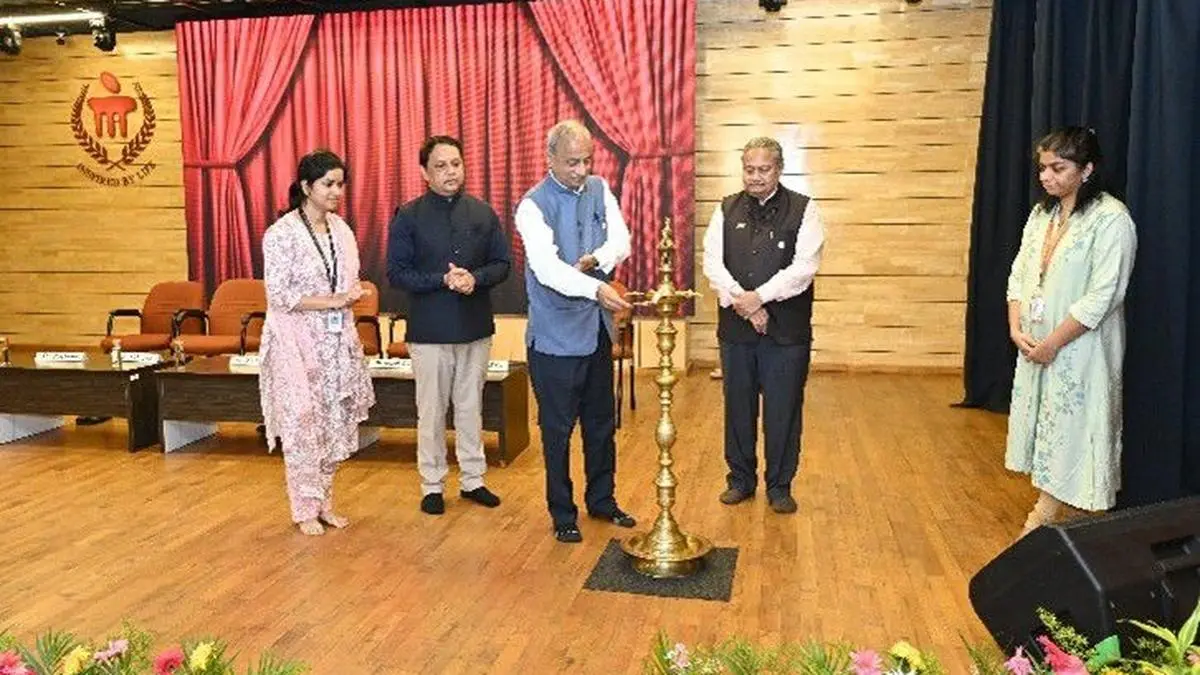
The department of Artificial Intelligence (AI) has always been at the forefront of innovative education, research, and development. With the rapidly growing demand for AI professionals in various industries, the department has taken a bold step to introduce MSc and Integrated MSc-PhD programmes in AI. Along with these new courses, the department also aims to upskill its faculty and students, solidifying its position as a leading institution in the field of AI.
The MSc programme in AI will offer a comprehensive curriculum that covers the fundamentals of AI, including machine learning, natural language processing, robotics, and computer vision. It will also delve into advanced topics such as deep learning, reinforcement learning, and AI ethics. With a strong emphasis on practical application and hands-on experience, the programme will equip students with the necessary skills to excel in the AI industry.
The Integrated MSc-PhD programme is designed for students who want to pursue a career in research and academia. It will provide a rigorous training in AI, along with the opportunity to conduct cutting-edge research in this field. Students enrolled in this programme will have the chance to work closely with faculty members on ongoing AI projects and contribute to the advancement of this rapidly evolving field.
The department’s decision to introduce these programmes is a response to the increasing demand for highly skilled AI professionals in the job market. The global AI industry is expected to reach a value of USD 190.61 billion by 2025, creating a plethora of job opportunities for AI professionals. By offering these programmes, the department aims to produce a pool of talented and well-trained individuals who will meet this demand and contribute to the growth of the AI industry.
Moreover, these programmes will also attract bright minds to the field of AI, providing them with an excellent platform to explore this exciting and constantly evolving field. The department is committed to creating an inclusive learning environment that promotes diversity and encourages students from all backgrounds to pursue a career in AI.
Apart from the new programmes, the department also recognizes the need to upskill its existing faculty and students to keep up with the dynamic nature of AI. With this in mind, the department will offer a range of courses, workshops, and seminars to provide faculty members and students with the latest knowledge and skills in AI. This will not only benefit the individuals but also enhance the overall academic and research capabilities of the department.
The faculty members of the department are renowned experts in the field of AI, with a vast amount of experience and knowledge. These courses will provide an opportunity for them to share their expertise and stay updated with the latest developments in the field. This will, in turn, benefit the students as they will receive top-notch education from trained and updated faculty members.
The upskilling courses for students will cover a range of topics, including AI applications in different industries, AI-driven entrepreneurship, and AI ethics. These courses will not only enhance their theoretical knowledge but also equip them with practical skills that are highly sought after by employers.
The department’s decision to introduce MSc and Integrated MSc-PhD programmes in AI, along with courses to upskill faculty and students, is a testament to its commitment to provide high-quality education and produce world-class AI professionals. This initiative will not only benefit the students and faculty members but also contribute to the growth and evolution of the AI industry.
In conclusion, the department’s new programmes and upskilling courses are a step in the right direction to meet the growing demand for AI professionals and to promote excellence in the field of AI. With its state-of-the-art infrastructure, experienced faculty, and innovative approach to education, the department of AI is well-equipped to produce the next generation of AI leaders. This is an exciting time for the department, and we look forward to welcoming students and faculty members to be a part of this journey towards a future of AI excellence.