
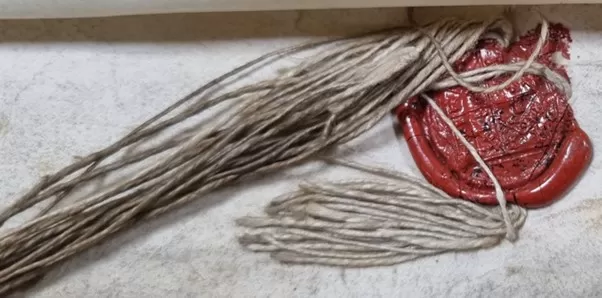
A recently discovered 1642 will has sparked a legal dispute over William Shakespeare’s property in Stratford-upon-Avon. This intriguing document, made by Thomas Nash on 25 August 1642, was found in a box of Chancery documents from the 17th century and earlier at The National Archives. This original version of the will has never been seen before, adding a new layer to the already mysterious life of the renowned playwright.
The discovery of this will has caused quite a stir among historians and Shakespeare enthusiasts. It sheds light on the legal battles that surrounded Shakespeare’s property after his death, and provides valuable insight into the lives of those close to him. The will was written by Thomas Nash, who was married to Shakespeare’s granddaughter, Elizabeth Hall. It is believed that Nash’s will was a crucial piece of evidence in the legal dispute over Shakespeare’s estate.
The will itself is a fascinating piece of history, as it reveals the intricate relationships and connections within the Shakespeare family. It mentions several important figures, including John Hall, Shakespeare’s son-in-law and a prominent physician, and Susanna Hall, Shakespeare’s daughter. It also mentions Judith Quiney, Shakespeare’s youngest daughter, and her husband Thomas Quiney. The will even mentions Shakespeare’s famous friends and colleagues, such as Richard Burbage, the renowned actor who played many of Shakespeare’s leading roles.
What makes this will even more intriguing is the fact that it was written during a turbulent time in England’s history. In 1642, England was on the brink of a civil war, with tensions rising between King Charles I and Parliament. This adds a political dimension to the will, as it was written during a time when the country was in turmoil.
The discovery of this will has also raised questions about the authenticity of previous versions of Shakespeare’s will. The most well-known version of Shakespeare’s will was written in 1616, just a few months before his death. However, there have been doubts about the authenticity of this will, as it was written in a shaky hand and contained several spelling errors. Some experts believe that it may have been written by a scribe, rather than Shakespeare himself. The newly discovered will, written 26 years later, could provide a more accurate account of Shakespeare’s wishes.
This discovery is a testament to the importance of preserving historical documents. The National Archives, which houses millions of records relating to the history of the United Kingdom, plays a crucial role in preserving and protecting our heritage. The fact that this will was found in a box of Chancery documents from the 17th century and earlier is a testament to the meticulous work of the archivists at The National Archives.
The discovery of this will also serves as a reminder of the enduring legacy of William Shakespeare. His works have captivated audiences for centuries and continue to be studied and performed around the world. This will adds a new layer to our understanding of the man behind the famous plays and sonnets. It provides a glimpse into his personal life and relationships, and further solidifies his place in history as one of the greatest playwrights of all time.
In conclusion, the discovery of this 1642 will at The National Archives has caused quite a stir in the world of Shakespearean studies. It sheds new light on the legal disputes over Shakespeare’s property and provides valuable insight into his personal life. This discovery is a testament to the importance of preserving historical documents and serves as a reminder of the enduring legacy of William Shakespeare.